What are the best tulip alternatives for early spring?
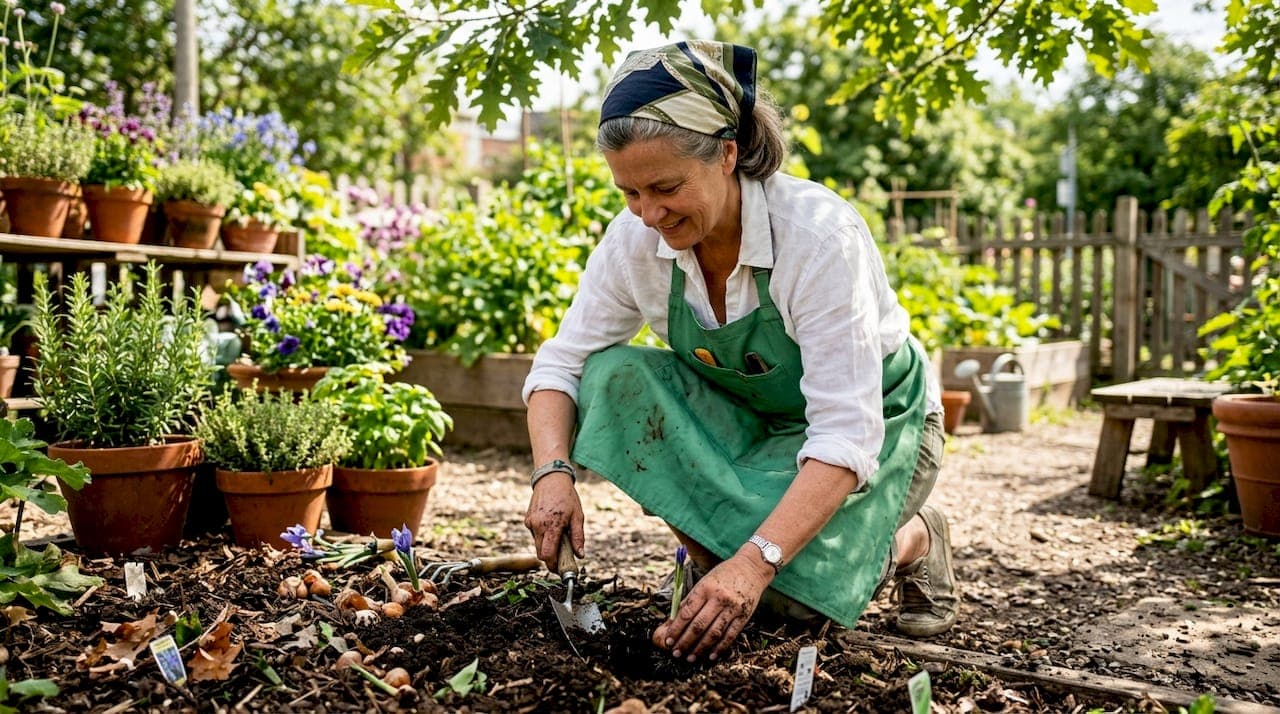
Daffodils, crocus, hyacinths, Dutch iris, and fritillaria are the strongest tulip alternatives for early spring gardens in the United States. Each one sidesteps tulips' biggest weakness: the strict chilling requirement of roughly 16 weeks near 40°F that makes reliable rebloom nearly impossible in warmer climates. The plants below bloom at similar times, hold up better as perennials, and several resist deer and squirrels far more effectively than tulips do.
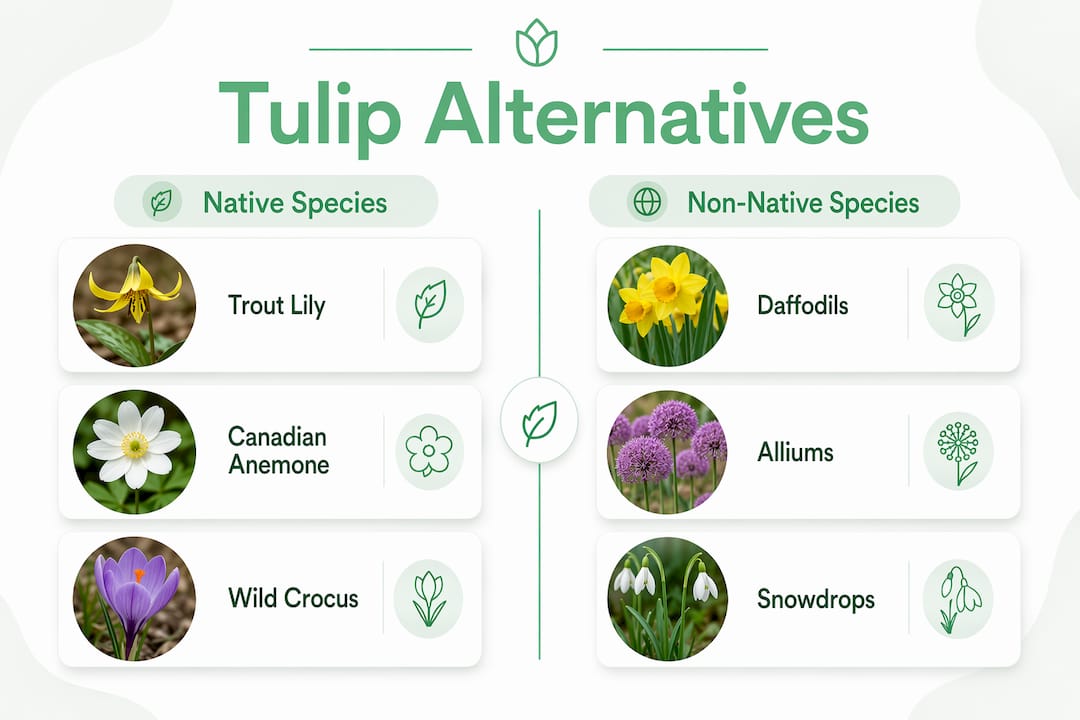
- Daffodils: The most widely recommended deer-resistant, low-maintenance alternative to tulips. They naturalize readily and return reliably for years.
- Crocus: Among the earliest bloomers, often pushing through snow in late winter. Excellent for edging and lawn naturalization.
- Hyacinths: Dense, fragrant flower spikes in purple, pink, white, and blue. They perform best in USDA Zones 4–8 and add strong vertical form.
- Canadian anemone: A native wildflower with white, cup-shaped blooms that closely resemble simplified tulip flowers. Spreads naturally in moist sites.
- Trout lily (Erythronium americanum): A native woodland species with nodding, cup-shaped blooms that reach 6–12 inches tall. Thrives in damp, shaded spots under deciduous trees.
- Dutch iris: Tall, colorful, and late-spring blooming. Pairs well with daffodils to extend the season into may and june.
- Fritillaria: Bell-shaped, often checkered or deep purple flowers with a dramatic presence that stands apart from any classic spring bulb.
- Spring Snowflake (Leucojum vernum): Nodding white bells on long stems. One of the best choices for cut flower gardens because the stems outlast lily of the valley in a vase.
- Camassia: Tall spikes of star-shaped blue or white flowers that bloom in mid to late spring. Tolerates wet soil better than almost any other bulb.
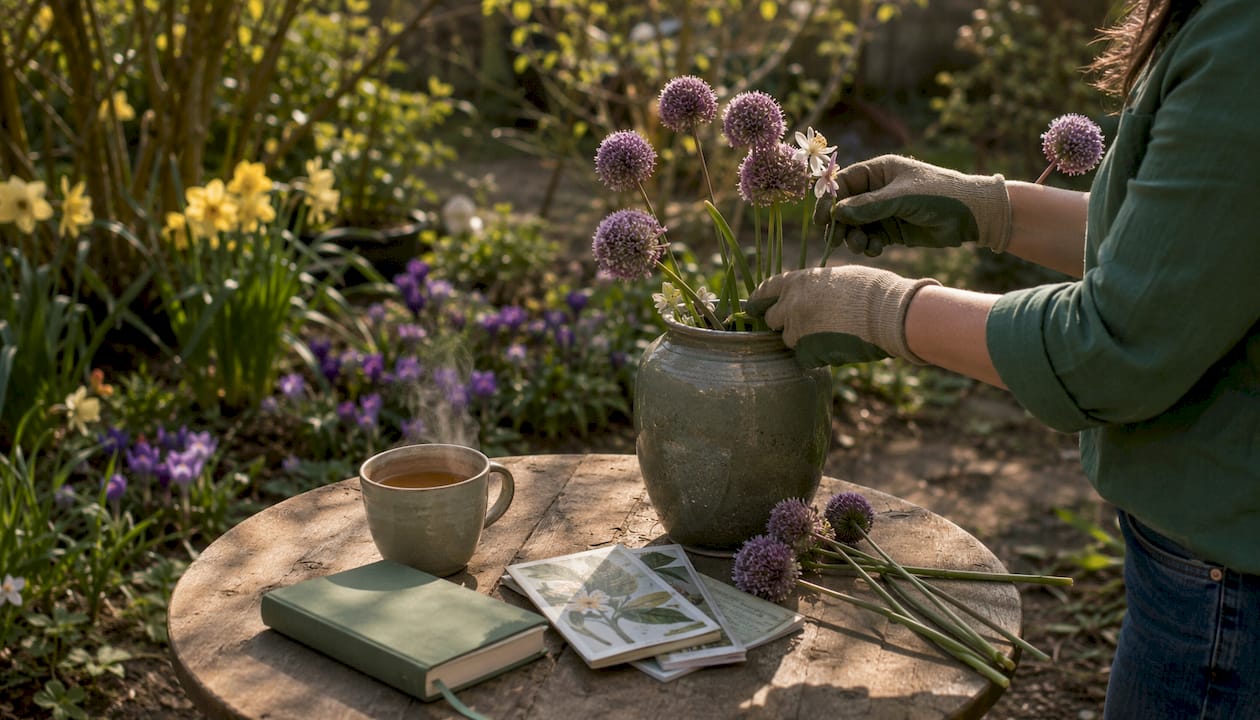
- Alliums: Spherical purple flower heads on tall, straight stems. They bloom after most spring bulbs and deter browsing animals with their onion scent.
- Lisianthus (Eustoma): Ruffled, cup-shaped blooms that closely mimic the tulip's silhouette in lavender, white, and deep purple.
How do these alternatives differ from tulips in care and growing needs?
Tulips demand well-drained soil and a cold dormancy period, with some requiring lifting and storage in warmer zones. Most of the alternatives here are more forgiving, but each has its own quirks worth knowing before you plant.
- Daffodils and Leucojum naturalize in most well-drained soils and need almost no intervention after planting. They are genuinely set-and-forget bulbs in Zones 3–8.
- Crocus prefers gritty, fast-draining soil and full sun. Plant corms 3–4 inches deep in fall and leave them alone; they spread on their own over several seasons.
- Hyacinths want rich, well-drained soil and full sun. They tend to produce smaller flower spikes after the first year, which many gardeners actually prefer for a more natural look.
- Dutch iris grows from corms, not true bulbs, and requires different dormancy management than tulips. In Zone 7 and colder, lift the corms after foliage dies back and store them dry until fall replanting.
- Camassia is the exception to the "good drainage" rule. It thrives in heavier, moisture-retentive soil and even tolerates seasonal flooding, making it ideal for low spots where other bulbs rot.
- Trout lily needs woodland conditions: dappled shade, consistently moist soil rich in organic matter, and patience. It spreads slowly by offsets and can take two to three years to establish a colony.
- Alliums want full sun and dry summers. They are one of the few spring bulbs that actually improve in lean, sandy soil.
Pro Tip: Match the microclimate before you buy. A north-facing bed under a maple suits trout lily and Canadian anemone perfectly, while a south-facing slope with sandy soil is where alliums and crocus will thrive for decades.
Which native plants can replace tulips in U.S. gardens?
Native spring bloomers offer something imported tulips never can: a built-in relationship with local pollinators, soil microbes, and seasonal rainfall patterns. Two stand out as genuine tulip substitutes for American gardeners.
- Canadian anemone (Anemone canadensis): White, five-petaled flowers with a yellow center bloom from late spring into early summer across Zones 3–7. The plant spreads aggressively by rhizome in moist soil, so give it space or use it to fill a difficult wet area where little else grows. Native bee species visit it heavily during bloom.
- Trout lily (Erythronium americanum): This eastern North American native blooms in early spring, often alongside the last crocus. Its mottled, lance-shaped leaves are as ornamental as the flowers. According to the Lady Bird Johnson Wildflower Center at the University of Texas, it is one of the recommended native alternatives to tulips for Midwestern gardeners. Plant it in groups of at least a dozen corms for visual impact, since individual plants are small.
Both species support native pollinators at a time of year when few other food sources are available. That ecological timing, early spring before most garden flowers open, is where native plants earn their keep.
How can you add visual variety beyond the classic tulip shape?
The tulip's cup shape is beautiful, but it is also one of the most repeated forms in spring gardens. These alternatives break that pattern with structure, scale, or color that stops people mid-path.
- Fritillaria: The checkered fritillary (Fritillaria meleagris) produces nodding, dark purple bells with a geometric pattern that looks almost hand-painted. Designers value these for dramatic color contrast against the soft pastels of daffodils and hyacinths. Crown imperial (Fritillaria imperialis) goes even bolder, with orange or yellow whorls atop 3-foot stems.
- Alliums: The spherical heads of Allium giganteum reach the size of a softball on 4-foot stems. Plant them behind shorter spring bulbs so the globe shape floats above the foliage as earlier flowers fade.
- Lisianthus: The ruffled petals and upright cup form make lisianthus one of the flowers most similar to tulips in silhouette. It works especially well in cut flower arrangements where the tulip's short vase life is a limitation.
- Spring Snowflake (Leucojum vernum): The nodding white bells with green-tipped petals read as delicate from a distance but hold their shape for weeks. They add a vertical, airy quality that contrasts well with the dense spikes of hyacinths nearby.
- Dutch iris: The upright, bearded form of Dutch iris looks nothing like a tulip, which is exactly the point. The blue and purple varieties in particular create a color shift that signals the transition from early to late spring.
How do you choose the right spring bloomer for your garden?
The right choice comes down to five factors: bloom timing, soil type, sun exposure, animal pressure, and how much maintenance you want to do each year.
- Bloom timing: Crocus and trout lily open earliest, often in March. Daffodils and hyacinths follow in mid-spring. Dutch iris and alliums close out the season in late spring and early summer.
- Soil type: Sandy or gravelly soil suits crocus, alliums, and Dutch iris. Rich loam works for hyacinths and daffodils. Moist, organic-rich soil is where trout lily and Canadian anemone perform best. Camassia handles wet clay that would rot most other bulbs.
- Sun exposure: Full sun (6+ hours) for alliums, crocus, hyacinths, and Dutch iris. Partial to full shade for trout lily and Canadian anemone. Leucojum and daffodils adapt to both.
- Animal resistance: Daffodils, alliums, fritillaria, and Leucojum are largely ignored by deer and squirrels. Crocus corms are a favorite of squirrels; plant them under wire mesh if browsing pressure is high.
- Maintenance level: Daffodils and Leucojum need almost nothing after planting. Dutch iris corms may need lifting in cold zones. Lisianthus is often grown as an annual in most of the U.S. and requires replanting each year.
How long do these alternatives bloom compared to tulips?
Tulips typically flower for one to two weeks before the petals drop. Most alternatives either match or exceed that window.
| Plant | Bloom season | Approximate duration |
|---|---|---|
| Crocus | Late winter to early spring | 1–2 weeks |
| Daffodil | Mid-spring | 3–4 weeks |
| Hyacinth | Mid-spring | 1–2 weeks |
| Trout lily | Early spring | 1–2 weeks |
| Dutch iris | Late spring | 1–2 weeks |
| Leucojum | Early to mid-spring | 3–4 weeks |
| Allium | Late spring to early summer | longest bloom windows |
| Fritillaria | Mid-spring | 1–2 weeks |
| Canadian anemone | Late spring to early summer | 4–6 weeks |
Canadian anemone and alliums offer the longest individual bloom windows. Stagger several of these species and you can maintain continuous color from february through june without a single tulip.
What are the environmental benefits of choosing tulip alternatives?
Tulips are native to Central Asia and the Mediterranean, and most cultivars sold in the U.S. are bred for appearance rather than ecological function. They offer little to native pollinators and often require annual replanting, which means more soil disturbance and more bulb imports each year.
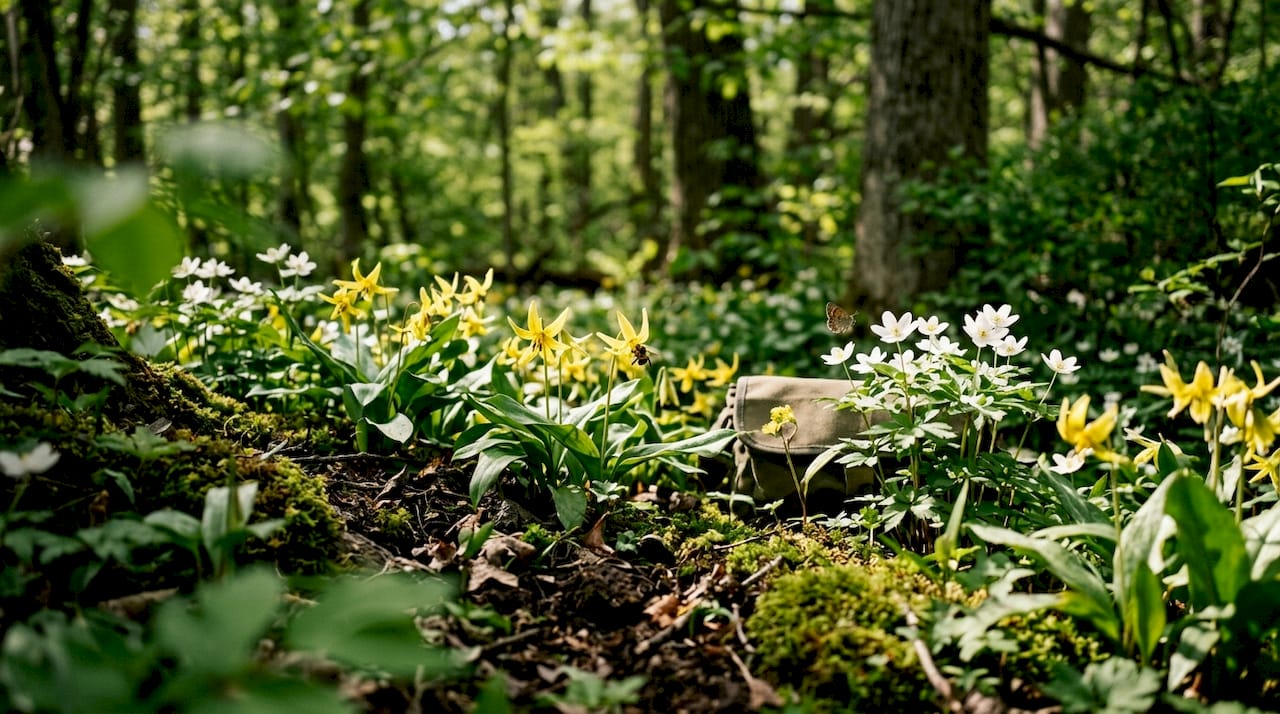
Native alternatives like trout lily and Canadian anemone feed early-emerging native bees at a moment when almost nothing else is in bloom. That timing matters more than most gardeners realize: queen bumblebees emerging in March and April need pollen immediately, and a patch of trout lily can be the difference between a colony establishing and failing.
Non-native alternatives like daffodils and alliums still outperform tulips environmentally because they naturalize and persist without annual replanting; manufacturers often prefer such durable plants, as explained in Plastic Pipe Benefits for Manufacturing. Fewer replacement bulbs means less shipping, less packaging, and less soil disruption each fall. Daffodils in particular have been documented as reliably perennial in most U.S. growing zones, returning for a decade or more from a single planting. The tradeoff is that non-native perennials, while low-maintenance, do not support the same breadth of native insect life as indigenous species.
Key Takeaways
Daffodils, crocus, and native species like trout lily outperform tulips in perennial reliability, animal resistance, and ecological value across most U.S. growing zones.
| Point | Details |
|---|---|
| Perennial reliability | Daffodils and Leucojum return for years without lifting, unlike tulips that often decline after one season. |
| Animal resistance | Daffodils, alliums, and fritillaria resist deer and squirrel browsing far better than tulips do. |
| Native plant value | Trout lily and Canadian anemone feed native pollinators in early spring when almost no other blooms are available. |
| Bloom season extension | Staggering crocus, daffodils, Dutch iris, and alliums delivers continuous color from late winter through early summer. |
| Soil matching | Choosing the right alternative for your soil type, wet for camassia, sandy for alliums, is the single biggest factor in long-term success. |