
What IoT actually means for small and medium US food producers
IoT in food manufacturing is the network of connected sensors, machines, and software that collects real-time data from your production floor and turns it into decisions you can act on. For small and medium-sized US producers, that shift from clipboards and manual logs to automated monitoring is where the real value lives.
Here is why it matters right now. Regulatory pressure under FSMA 204 and HACCP requirements demands documentation that manual processes struggle to deliver consistently. At the same time, thin margins leave little room for unplanned downtime or product rework. IoT addresses both by replacing reactive oversight with continuous, sensor-based monitoring that flags problems before they become line stops or compliance failures.
The core architecture connects three layers:
- Equipment sensors capturing temperature, humidity, vibration, and cycle data in real time
- Human input systems where operators log downtime reasons, rework events, and shift notes
- A software platform that unifies machine and human data into a single, readable view
Gembalabs is built specifically for this model, combining raw equipment data with staff-sourced inputs to give facility managers a complete picture of what is actually happening on the floor.
Table of Contents
- Core IoT technologies your facility can deploy today
- Operational benefits backed by comparative studies
- Best practices for integrating IoT without derailing your operation
- Where IoT and AI in food manufacturing are heading
- IoT applications across the food manufacturing floor
- Why SMEs benefit more than they expect
- Challenges SMEs face when adopting IoT, and how to solve them
- What successful IoT deployments in US food manufacturing SMEs look like
- Training your team to use IoT data effectively
- Gembalabs gives you the visibility your facility has been missing
- Key Takeaways
Core IoT technologies your facility can deploy today
The sensor layer is where everything starts. Temperature and humidity sensors protect product quality in cold storage and processing areas. Vibration sensors on motors and conveyors catch bearing wear before it causes a breakdown. Flow meters and pressure sensors monitor filling and packaging lines for drift that leads to giveaway or underfill.

Above the sensor layer, IIoT platforms prioritize scalability and device connectivity so you can add equipment without rebuilding your data architecture. Edge computing processes time-sensitive data locally, reducing latency for real-time alerts. Cloud connectivity stores historical data for trend analysis and compliance records.
AI sits on top of all of it. AI-native process controls turn real-time product data into adjustments that stop quality drift before scrap occurs. That is a meaningful shift: instead of a supervisor reviewing yesterday's batch report, the system flags a deviation mid-run.
Key technology components worth knowing:
- Digital twins: virtual replicas of equipment or lines that let you model changes before making them
- Edge computing nodes: local processing that keeps alerts fast even when cloud connectivity is slow
- Integration middleware: software bridges that pull data from older PLC-based equipment into modern platforms
- Predictive maintenance algorithms: models trained on vibration and temperature patterns to forecast failures
For SMEs, the practical entry point is usually a cloud-based dashboard with mobile access, giving supervisors visibility from anywhere on the floor or off-site.
Operational benefits backed by comparative studies
The numbers from highly automated beverage facilities are hard to ignore: 20% higher equipment effectiveness, 45% less product waste, and 20% fewer packaging line stops compared to less automated peers. Those gains do not require a greenfield factory. They come from connecting existing equipment to a platform that makes data visible and usable.
Stat to know: Highly automated food and beverage facilities report 45% less product waste than their less automated counterparts.
Real-time exception-based monitoring also changes how compliance works. Instead of reconstructing a temperature log after a deviation, your system has a continuous, timestamped record that satisfies HACCP documentation requirements automatically. Traceability from raw material intake to finished goods becomes a byproduct of normal operations rather than a separate administrative task.
Smart factories also reduce energy consumption, labor costs, and waste while giving managers the data-driven agility to respond to margin pressure. Scheduling becomes more precise when you know actual cycle times. Labor allocation improves when you can see where bottlenecks form by shift, line, or product.
Best practices for integrating IoT without derailing your operation
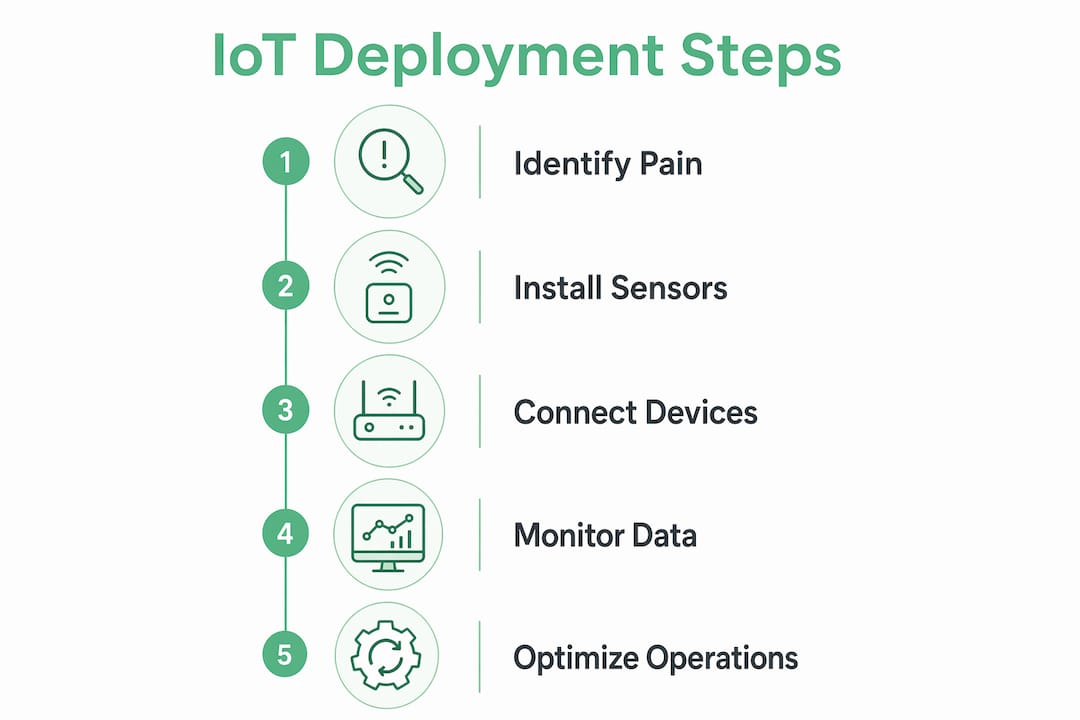
Start with one pain point, not the whole floor. Piloting IoT in a single facility focused on a specific metric, such as downtime frequency or rework rate, lets you validate whether the data you are collecting is actually useful before committing to a broader rollout.
The biggest technical hurdle is usually the IT/OT gap. Standardizing data collection across legacy and new equipment is critical. Older PLCs and newer sensors often speak different protocols, and without a middleware layer or a platform designed to handle that diversity, you end up with siloed data that nobody trusts.
Practical steps for a successful rollout:
- Map your current data gaps before buying hardware. Know what you cannot see today.
- Choose modular platforms that add sensors and users without requiring a full reinstall
- Standardize input formats so machine data and operator notes live in the same structure
- Set up role-based dashboards so line workers see what they need, and managers see the full picture
- Use secure IoT protocols (TLS encryption, device authentication) to protect both food safety records and operational data from unauthorized access
- Audit data quality regularly, not just at launch. Garbage in, garbage out applies here as much as anywhere.
Pro Tip: The most accurate production reports combine machine data with operator input collected at the moment of the event, not reconstructed at end of shift. Platforms that make it frictionless for floor staff to log a downtime reason or a rework note in real time, including in Spanish for bilingual teams, produce far more reliable data than those that rely on memory.
Gembalabs supports this directly with bilingual operator input and AI-generated reports that pull from both equipment cycles and staff-entered context, so the insight you get reflects what actually happened, not just what the sensor saw.
Where IoT and AI in food manufacturing are heading
The next wave is less about adding sensors and more about what the software does with the data. Predictive quality control, where AI flags a likely defect before it reaches the end of the line, is moving from pilot to standard practice. FSMA 204 compliance is accelerating IoT adoption among SMEs that previously saw traceability as a large-producer concern.
Emerging capabilities worth watching:
- Digital twins at the line level, letting operators simulate a changeover or a new recipe before running it live
- Supply chain integration, connecting your production data to supplier and logistics systems for end-to-end visibility
- Energy monitoring tied to production output, so you can see cost per unit and identify waste in real time
- Autonomous process adjustments, where the system corrects a fill weight or temperature without waiting for a supervisor
Sustainable packaging decisions are also increasingly data-driven, with IoT-enabled material monitoring reducing overuse and waste across production runs.
The direction is clear: connected food supply chains where every variable, from raw material intake to finished goods dispatch, is tracked, analyzed, and acted on without manual intervention. For small and medium producers, the advantage is not just efficiency. It is the ability to compete on quality and compliance without the overhead that used to require a much larger operation.
IoT applications across the food manufacturing floor
IoT in food manufacturing covers more ground than most operators initially expect. Beyond temperature monitoring, common applications include:
- Predictive maintenance on mixers, ovens, and conveyors to prevent unplanned stops
- Automated inventory tracking that signals reorder points before a raw material runs short
- Smart packaging line monitoring that catches fill weight drift or seal failures in real time
- Cold chain visibility from receiving dock through finished goods storage
- Energy consumption tracking by line or shift to identify inefficiencies
Real-time dashboards and alerts are consistently cited by small and medium food manufacturers as the tools that most directly improve throughput and operational agility.
Why SMEs benefit more than they expect
Large producers have had IoT for years. The gap has narrowed because cloud-based platforms now make deployment affordable without a dedicated IT team. An SME running two or three lines can get the same visibility a large plant has, scaled to its actual complexity.
The specific gains for smaller operations tend to cluster around three areas: catching equipment issues before they cause a full-line stop, reducing the labor hours spent on manual reporting, and having the documentation ready when an auditor or customer asks for it. Factory cleaning and sanitation protocols also benefit from IoT scheduling, with sensor data triggering cleaning cycles based on actual production conditions rather than fixed time intervals.
Challenges SMEs face when adopting IoT, and how to solve them
The three most common friction points are cost, integration complexity, and workforce resistance.
Cost is manageable when you start narrow. A single-line pilot with a subscription-based platform avoids large capital outlays and lets you prove ROI before expanding.
Integration complexity comes from legacy equipment that was never designed to share data. The solution is middleware or a platform that handles protocol translation, so you are not replacing machinery to get connectivity.
Workforce resistance is often the hardest to solve and the least discussed. Bilingual support and intuitive interfaces significantly improve adoption rates among floor staff. If logging a downtime event takes three minutes and requires navigating four screens, operators will stop doing it. If it takes fifteen seconds on a tablet in their preferred language, they will.
What successful IoT deployments in US food manufacturing SMEs look like
A mid-sized tortilla producer in Texas connected vibration sensors to its main mixer fleet and set alert thresholds based on historical failure patterns. Within the first quarter, maintenance caught two bearing failures before they caused unplanned downtime, and the team shifted from reactive repairs to scheduled replacements.
A small juice bottling operation in California added temperature and fill-weight monitoring to its pasteurization and filling lines. The real-time alerts reduced product holds from temperature deviations by giving operators a warning with enough time to adjust, rather than discovering the issue during a quality check after the fact.
Neither deployment required replacing existing equipment. Both started with a defined problem, a narrow sensor deployment, and a platform that made the data readable without a data analyst on staff.
Training your team to use IoT data effectively
The technology is only as good as the people interpreting it. Training for IoT tools in food manufacturing works best when it is role-specific. Line operators need to know how to read an alert and what action it requires. Supervisors need to understand trend data and shift summaries. Managers need to know how to pull a compliance report or investigate a recurring issue.
Practical training principles:
- Train on real data from your own facility, not generic demos. Operators engage more when they recognize their own line.
- Keep initial training narrow: one dashboard, one alert type, one response protocol. Expand from there.
- Reinforce with short refreshers after the first month, when questions from actual use surface.
- Designate a floor champion who becomes the go-to person for questions, reducing the load on management.
Platforms that offer bilingual interfaces reduce the training burden significantly for facilities with mixed-language teams. When the tool speaks the operator's language, the learning curve shortens.
Gembalabs gives you the visibility your facility has been missing
Most IoT platforms were built for large plants with IT departments. Gembalabs was built for facilities like yours: two to ten lines, a mixed-language floor team, and a manager who needs answers without hiring a data analyst.
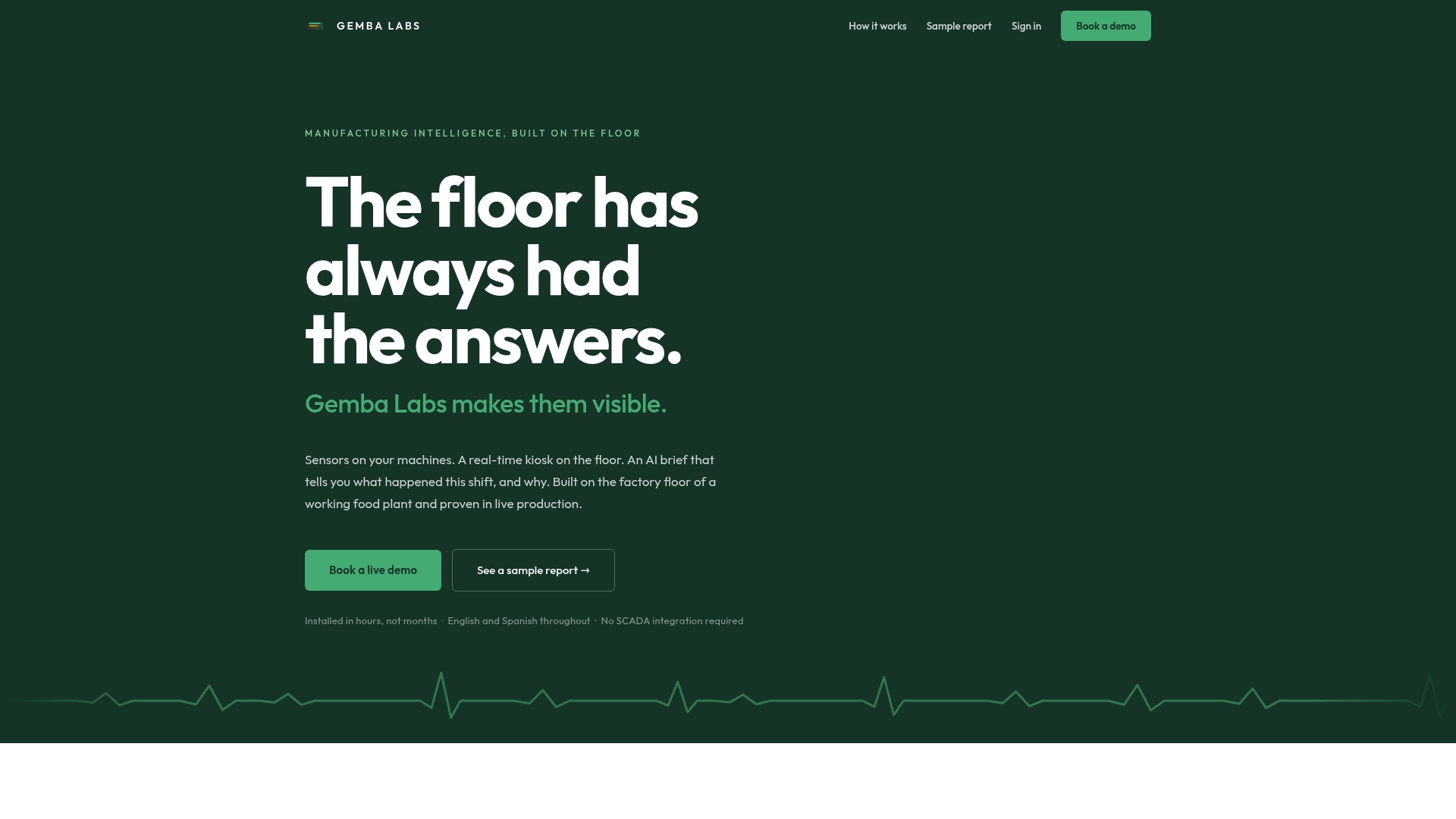
The platform connects directly to your equipment cycles and collects operator input in real time, in English or Spanish. From that combined data, Gembalabs generates AI-powered reports on downtime patterns, rework frequency, shift performance, and recurring issues, delivered in plain language so you can act on them the same day. There is no complex setup, no dedicated IT staff required, and no long implementation timeline.
If you want to see what your facility's data actually looks like when it is organized and analyzed, see how it works and request a pilot for your operation.
Key Takeaways
IoT in food manufacturing delivers the most value when machine data and human input are unified in a single platform that makes both visible and actionable in real time.
| Point | Details |
|---|---|
| Start with a pilot | Focus on one pain point, such as downtime or rework, before expanding IoT across the full facility. |
| Unify machine and human data | Sensor data alone misses context; operator input collected in real time produces far more reliable insights. |
| Automation lifts performance | Highly automated facilities report 20% higher equipment effectiveness and 45% less product waste than less automated peers. |
| Compliance becomes automatic | Real-time, timestamped monitoring satisfies HACCP and FSMA 204 documentation requirements without separate administrative work. |
| Gembalabs fits SME operations | Gembalabs combines equipment cycle data with bilingual staff input and AI-generated reports, built specifically for small and medium food manufacturers. |