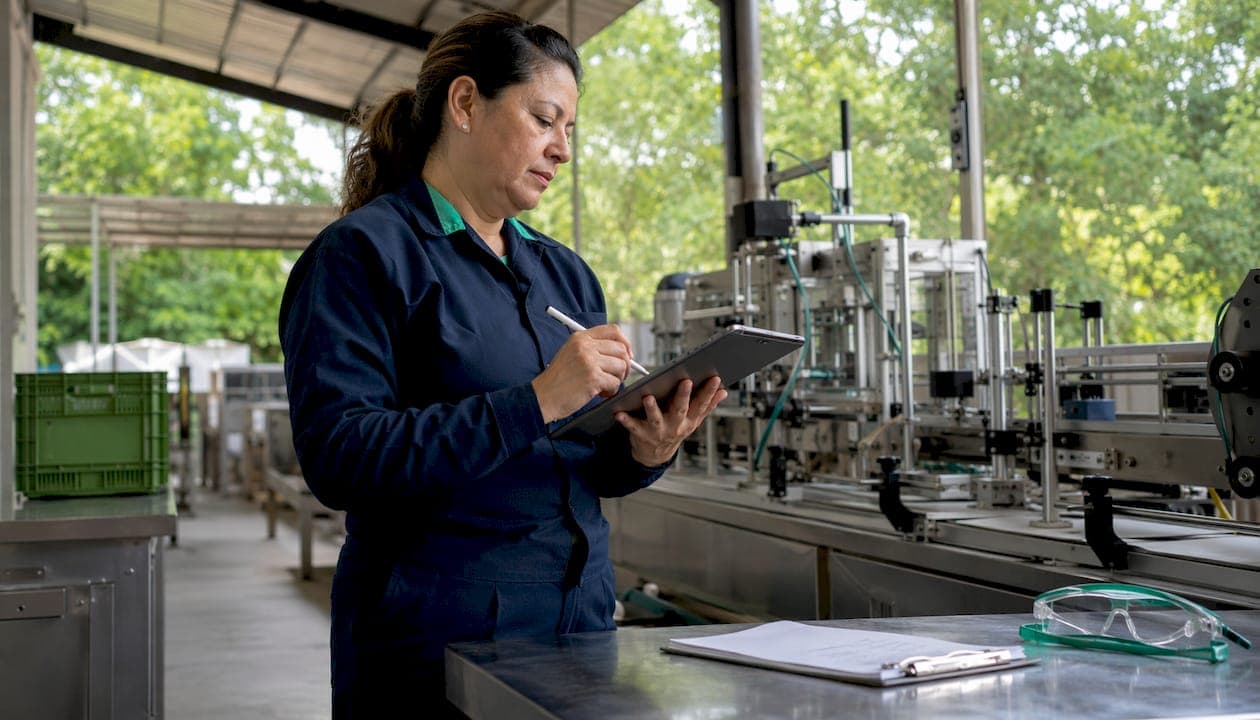
For small and mid-sized food manufacturers, Gembalabs is the strongest fit among food-specific MES options today. The reason is straightforward: sensor-based automatic capture of downtime and micro-stops, combined with SaaS economics, gets you from zero visibility to a measurable OEE baseline in weeks, not quarters. Most SMEs running manual shift logs are operating with a distorted picture of their own plant. Median OEE in food and beverage plants is approximately 60%, with unlogged "hidden factory" losses consuming 30% to 45% of available capacity. Gembalabs surfaces those losses automatically, combining raw sensor data with operator input and AI-generated reports on downtime, rework, and shift performance.
- Sensor-first capture: No PLC changes required; edge devices read equipment cycles directly.
- Bilingual operator input: English and Spanish, which matters on most U.S. food plant floors.
- AI reports on demand: Downtime summaries, rework patterns, and shift results without manual data pulls.
- SaaS deployment: No on-site server infrastructure or dedicated IT team needed.
Table of Contents
- Why does a food-specific MES matter more than a generic one?
- What should you demand in an MES demo or RFP?
- What ROI looks like and the metrics you must track
- Pilot to rollout: a practical checklist for SME food plants
- How to evaluate MES vendors for your food plant
- What a real SME pilot looks like in practice
- Key Takeaways
- The case for sensor-first MES in food manufacturing
- Gembalabs: built for the SME food plant pilot
Why does a food-specific MES matter more than a generic one?
Generic MES platforms are built around equipment uptime. Food plants have a different problem: availability and quality losses dominate because sanitation windows, allergen changeovers, and packaging micro-stops eat into planned production time in ways that a standard downtime log never captures. A 15-minute allergen changeover that runs longer can be underestimated if the extra minutes are not coded correctly.
Manual shift logs make this worse. They routinely overstate OEE because operators miss micro-stoppages that last only seconds. Sensor-based capture fixes the trust problem: every stop is timestamped, every restart is recorded, and the morning review becomes a data conversation instead of a memory contest.
The SaaS model matters for SMEs specifically. Cloud deployment means no hardware maintenance, no on-site IT security overhead, and a faster path from signed contract to live data. SaaS and modular MES solutions have made targeted pilots practical for plants that previously could not afford heavy custom programming. For a 50-person bakery or a mid-sized co-packer, that changes the economics entirely.
Food-specific drivers your MES must handle:
- Sanitation and CIP windows (scheduled and unscheduled)
- Allergen and product changeovers with verified restart timestamps
- Packaging line micro-stops (jams, label misfeeds, seal failures)
- Short shelf-life pressure on batch scheduling and WIP
- Lot and batch traceability for FDA/FSMA audit readiness
What should you demand in an MES demo or RFP?
Six requirements materially affect first-year ROI for food SMEs. Miss any one of them and you will spend the first six months patching gaps instead of recovering capacity.
- Automatic micro-stop and downtime capture via sensors or edge devices, with no dependency on operator memory.
- Recipe and batch/lot traceability tied directly to OEE events so a quality hold links back to a specific run.
- Configurable quality checkpoints at critical control points, not just end-of-line.
- Bilingual operator data entry (English and Spanish) to reduce input errors and improve adoption.
- Integration hooks for ERP, CMMS, and SCADA/historians so data flows without manual re-entry.
- Audit-ready logs with timestamped reason codes that satisfy FSMA traceability requirements.
The first three drive the most measurable ROI in year one. Changeover visibility alone, once you have accurate timestamps, reveals a notable amount of recoverable capacity that was previously invisible. A food and beverage MES must combine traceability, quality control, recipe management, and real-time visibility into a single system to deliver on that promise.
Pro Tip: Deploy sensors on one packaging line first, reading equipment cycle signals at the edge. You get live data without touching PLC logic, which eliminates production risk and lets you validate the sensor approach before committing to a plant-wide rollout.
What ROI looks like and the metrics you must track
Expect first losses to appear within two weeks of sensor deployment. Payback for a single-line pilot typically lands in the 3–12 month window depending on line speed, product mix, and how aggressively the team acts on findings.
Core KPIs to track from day one:
- Availability: Planned production time minus downtime, expressed as a percentage.
- Performance: Actual output rate versus target rate.
- Quality: Good units as a share of total units produced.
- Micro-stop frequency: Count and duration by stop type per shift.
- Changeover time: Actual versus target, with timestamped start and restart.
- Waste per unit: Scrap and rework divided by total output.
- Energy and water per unit: Pair OEE with utility meters to produce normalized KPIs that show the cost of inefficiency, not just the time.
Industry baseline: Median food plant OEE sits near 60%, with top-tier facilities reaching about 75%. A realistic first-year target for an SME starting from that median involves measurable improvements driven by changeover and micro-stop reductions.
| Metric | Typical SME Baseline | — |
|---|---|---|
| OEE | Around the industry median | A moderate improvement target |
| Changeover time | Untracked | Measured with meaningful reduction |
| Micro-stop frequency | Unknown | Categorized by type and shift |
| Waste per unit | Estimated | Tracked per batch or lot |
Pilot to rollout: a practical checklist for SME food plants
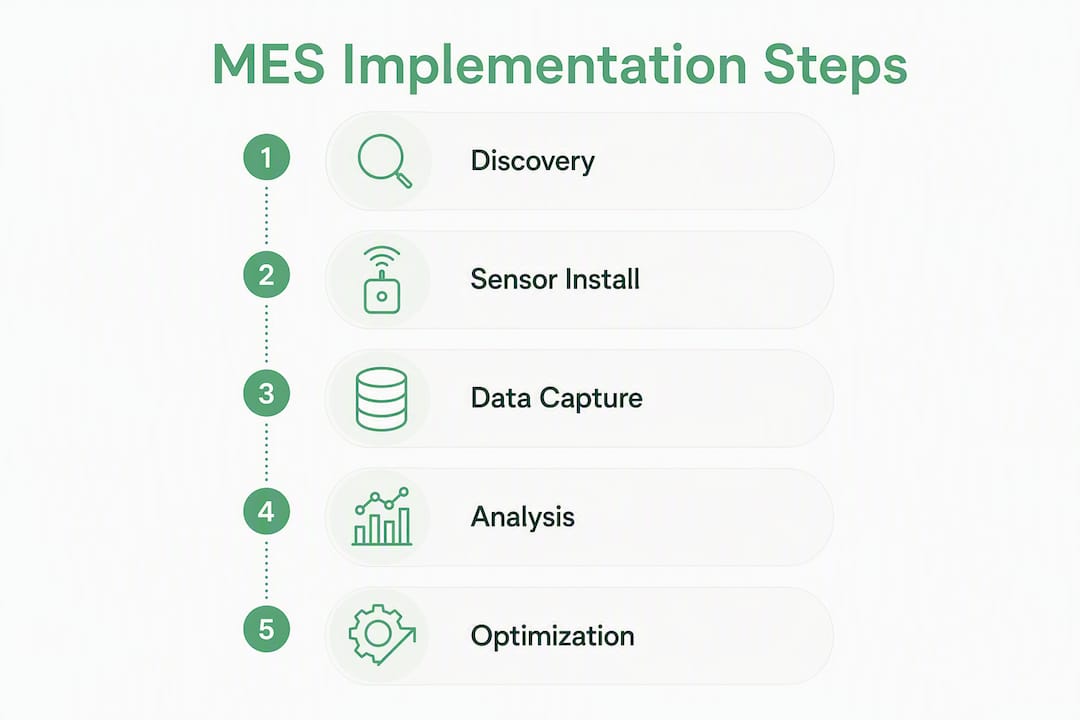
A single-line pilot on one packaging line is the fastest path to value. It limits risk, produces a defensible ROI case, and gives the operations team a working model before asking IT or finance to approve a plant-wide budget.
Step-by-step checklist:
- Define the pilot line and document current manual OEE baseline (even if imperfect).
- Deploy edge sensors on the target line; confirm signal quality before going live.
- Configure reason codes for the top downtime and changeover categories on that line.
- Train operators on the bilingual input interface; run one full shift with supervision.
- Map traceability linkage: batch or lot numbers to OEE events and quality checkpoints.
- Connect to ERP for production orders and to CMMS for maintenance work orders.
- Run a validation period; compare sensor OEE to manual log OEE.
- Present the gap analysis to operations and maintenance leadership.
- Approve phased rollout to remaining lines based on pilot findings.
Timeline:
| Phase | Duration | Key Output |
|---|---|---|
| Discovery and scoping | About one to two weeks | Line selection, sensor plan, data map |
| Pilot deployment | A few weeks | Live OEE baseline, micro-stop map |
| Validation and ROI tracking | Several weeks | Gap analysis, changeover report |
| Phased plant rollout | Several months | Full-facility OEE dashboard |
Budget bands vary by plant size. A single-line pilot covering sensor hardware, edge devices, and a SaaS subscription usually costs significantly less than the cost of a single unplanned downtime event on a high-speed line. Real-time monitoring guidance for food packaging lines can help scope hardware requirements before your first vendor call.
How to evaluate MES vendors for your food plant
Use demo tasks and pilot acceptance criteria, not slide decks, to evaluate fit. Any vendor can show a polished dashboard. What you need to see is the system doing the actual work on your actual problem.
Evaluation checklist:
- Prove automatic micro-stop capture: run the line, induce three stop types, confirm all three appear timestamped without operator input.
- Show bilingual operator flows: have a Spanish-speaking operator complete a reason-code entry without assistance.
- Verify traceability linkage: generate a batch record and confirm it ties to OEE events and quality checkpoints.
- Demonstrate ERP and CMMS integration: push a production order from ERP and confirm it appears in the MES without manual re-entry.
- Review audit log: confirm timestamped records are immutable and exportable for FSMA compliance.
- Confirm speed to pilot: ask for a committed go-live date, not a project plan.
Numbered demo tasks to assign every vendor:
- Capture three micro-stop types automatically during a 10-minute live run.
- Execute a simulated changeover and show the timestamped restart tied to a batch record.
- Generate an audit-ready OEE report for a single shift, exportable to PDF.
Gembalabs meets these criteria directly. Sensor-based equipment monitoring captures stops without operator intervention. The bilingual interface handles English and Spanish input natively. AI-generated intelligence reports summarize downtime, rework, and shift results without manual data pulls, and the pilot-first sales model means you get a working deployment before committing to a full contract. For a deeper look at how food traceability integrates with MES, the evaluation criteria map directly to what Gembalabs delivers out of the box.
What a real SME pilot looks like in practice
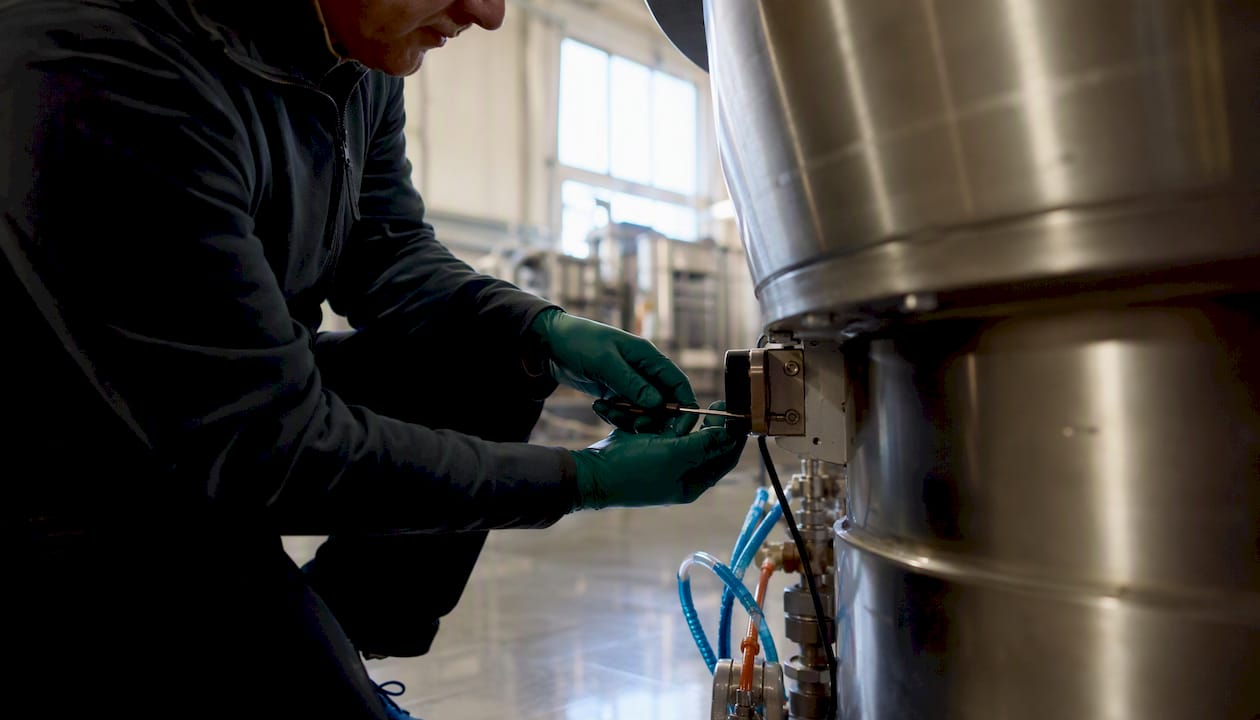
An anonymized mid-sized snack food manufacturer running two packaging lines started a Gembalabs pilot on their higher-volume line. Before the pilot, their self-reported OEE was approximately 68% based on manual logs. Two weeks after sensor deployment, the actual measured OEE came in at 58%, a 10-point gap explained almost entirely by micro-stops and unlogged changeover overruns.
Measured impact: OEE moved from a sensor-verified 58% baseline to approximately 74% within eight weeks. Changeover time on the primary line dropped by roughly 35% after the team used timestamped data to identify and eliminate three recurring delay patterns.
What made the difference:
- Sensor data exposed micro-stops that operators had not been logging because each one lasted under 30 seconds.
- Bilingual reason-code entry increased operator participation rate significantly within the first two weeks.
- The AI-generated shift report gave the production manager a daily summary without requiring manual spreadsheet work.
Two things you can copy immediately:
- Start your pilot on the line with the highest product mix, not the simplest one. That is where changeover losses are largest and the ROI case is fastest to build.
- Set a two-week "trust the sensor" rule: do not adjust reason codes or override sensor data during the validation window. The gap between your manual log and the sensor baseline is the number that justifies the investment.
Key Takeaways
A sensor-first SaaS MES is the fastest path to recovered capacity for SME food manufacturers, and Gembalabs is built specifically for that use case.
| Point | Details |
|---|---|
| Start with sensor capture | Automatic micro-stop detection closes the gap between manual OEE (~68%) and actual sensor OEE (~58%). |
| OEE baseline is approximately 60% industry-wide | Top-quartile food plants reach about 75%; the 30%–45% hidden factory is where SME pilots find their ROI. |
| Pilot one line first | A single packaging-line pilot (2–4 weeks) produces a defensible ROI case before plant-wide commitment. |
| Track six core KPIs | Availability, performance, quality, micro-stop frequency, changeover time, and waste per unit drive first-year gains. |
| Gembalabs fits SME food plants | Sensor-based monitoring, bilingual operator input, and AI shift reports make it the recommended starting point. |
The case for sensor-first MES in food manufacturing
Most food plant operators already know their OEE number is wrong. They just do not know by how much. The gap between what the shift log says and what the sensors actually measure is not a data quality problem you can solve with better training or a new spreadsheet template. It is a structural problem: humans cannot log what they cannot see, and micro-stops that last four seconds are invisible to anyone not standing at the machine.
What surprises most operations managers is not the size of the gap. It is how quickly the team starts acting on it once the data is trusted. When a morning review is built on sensor timestamps instead of recalled events, the conversation shifts from "I think the sealer was jamming" to "the sealer jammed 47 times between 6 AM and 10 AM, averaging 8 seconds each, and it always follows a product changeover." That specificity changes what maintenance does next.
The pilot-first model matters here. A four-week pilot on one line is a low-stakes way to prove the concept to finance, operations, and the plant floor simultaneously. If the data does not show recoverable losses, you have not committed to a multi-year contract. In practice, the data always shows recoverable losses, because the hidden factory is real in every plant that has been running on manual logs.
Gembalabs: built for the SME food plant pilot
Most food plants that contact Gembalabs are not looking for a platform overhaul. They want to know what is actually happening on one line, right now, without hiring a data team or replacing their existing systems.
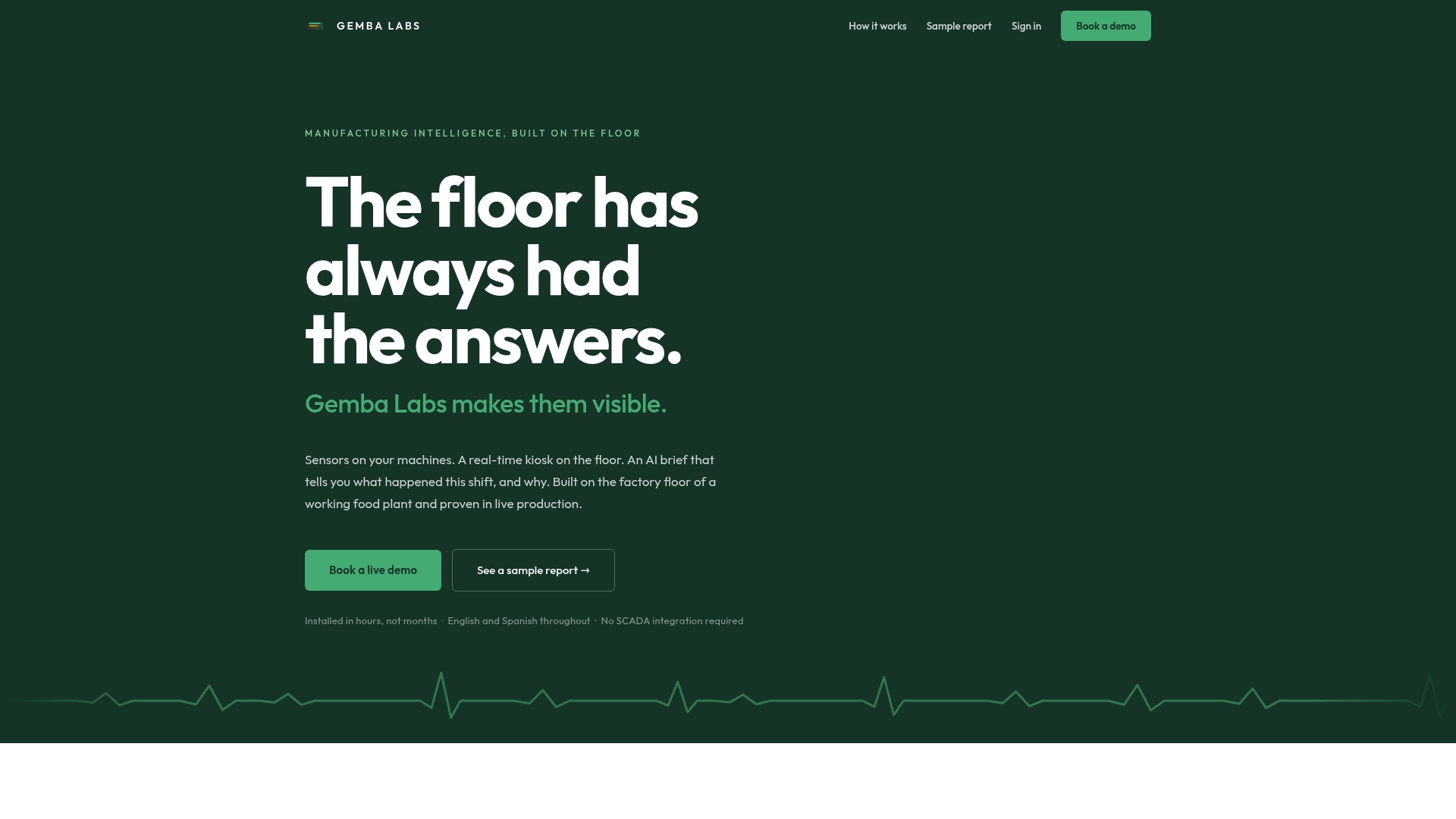
Gembalabs deploys sensor-based monitoring on your equipment, collects operator input in English and Spanish, and delivers AI-generated reports on downtime, rework, and shift performance, all without requiring PLC changes or on-site server infrastructure. A standard pilot covers one packaging line over 4–8 weeks and delivers three concrete outputs: an OEE baseline report, a micro-stop frequency map by stop type, and a changeover time report with timestamped before-and-after data.
The pilot scope is intentionally narrow so your team can validate the approach before committing to a full rollout. To see how the intelligence layer works and request a pilot scoped to your line, visit Gembalabs.io.