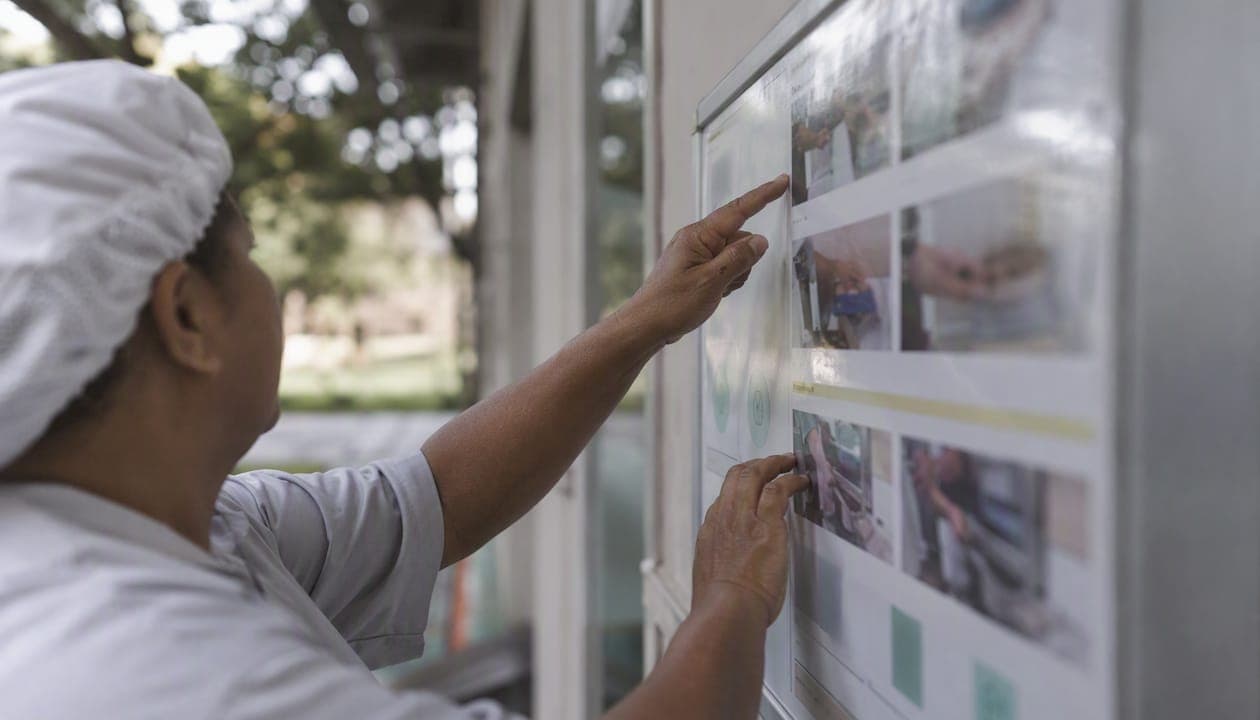
The fastest, safest way to deliver bilingual work instructions is a single-source, visual-first workflow that auto-publishes every language and uses human-in-the-loop review for safety-critical steps. Everything else, including maintaining separate translated files per language, is a version-drift problem waiting to happen.
Here is the minimum viable architecture for a pilot:
- Pick one high-frequency process with measurable outcomes (defects, rework, cycle time).
- Record the master process once, using video or annotated photos per step.
- Auto-generate language outputs (English and Spanish at minimum) from that single master.
- Route only safety-critical steps to a bilingual SME reviewer before publishing.
- Post a QR code or station ID at the workstation so operators can pull instructions on day one.
That five-step sequence is the whole model. The sections below explain why it works, how to implement it, and what to measure.
Table of Contents
- What goes wrong when teams try to support multiple languages?
- How should you design instructions for a multilingual workforce?
- How do you implement bilingual instructions from pilot to plant-wide scale?
- What features should you require in bilingual instruction software?
- How do you keep bilingual instructions current and safe over time?
- How do you measure whether bilingual instructions are working?
- What do food manufacturing pilots actually show?
- Your 30-day pilot starter checklist
- Key Takeaways
- The part most guides skip
- Gembalabs fits where most SME food manufacturers actually are
- Useful sources
What goes wrong when teams try to support multiple languages?
Most failed multilingual programs share the same handful of problems. Recognizing them early saves months of wasted effort.
Version drift is the most common and most dangerous failure. A team creates an English SOP, sends it to a translation service, and stores the Spanish version as a separate file. Six months later, the English version gets updated after a process change. The Spanish file does not. Now two workers on the same line are following different procedures.
Raw machine translation on safety-critical steps is the second major risk. For routine procedural language, machine translation is accurate enough, especially when paired with visual context. But for lockout/tagout sequences, chemical handling steps, or allergen controls, a mistranslation can cause serious harm. Human-in-the-loop review exists precisely for this: route only those high-risk steps to a bilingual subject matter expert, not the entire document.
Text-heavy formats assume a literacy level many operators do not have in either language. A 12-step paragraph-format SOP is hard to follow in your first language. In your second, it is nearly impossible.
Distribution failures are quieter but just as damaging. If operators cannot find the current instruction at the workstation, they work from memory or ask a coworker. Neither is reliable. Hard-to-find files create hidden noncompliance that only surfaces during an audit or an incident.
Pro Tip: Apply human review selectively. Tag each step with a risk level (low, medium, high) and route only medium and high-risk steps to your bilingual SME reviewer. This cuts review time significantly while keeping safety-critical language accurate.
How should you design instructions for a multilingual workforce?
The Guiding Principles for Dual Language Education from the Center for Applied Linguistics frames this well: effective bilingual instruction depends on structured input, comprehensible scaffolding, and technology that coordinates content across languages. The same principles apply on the shop floor.
Visual-first, always. Every step gets a screenshot, annotated photo, or short clip. The image carries the meaning; the text confirms it. This approach works even when machine translation is imperfect because the visual context fills the gap.
Single-action steps. Write one action per step. "Open valve A, then check gauge B, then record the reading" is three steps, not one. Short steps translate more accurately, both by machine and by human reviewers.
Controlled language. Use consistent terminology throughout the master document. If you call it a "fill valve" in step 3, do not call it the "inlet valve" in step 7. Terminology consistency is the single biggest factor in machine translation quality.
"The goal is not to translate a document. The goal is to publish one process in every language your workforce speaks, from a single source, so that every worker sees the same current version." This is the shift from legacy translation to modern multilingual instruction design, and it changes how updates work entirely.
Single source of truth. The one-source, many-languages model means you maintain one master process record. Every language is a view of that master, not a separate file. When you update the master, every language updates automatically.
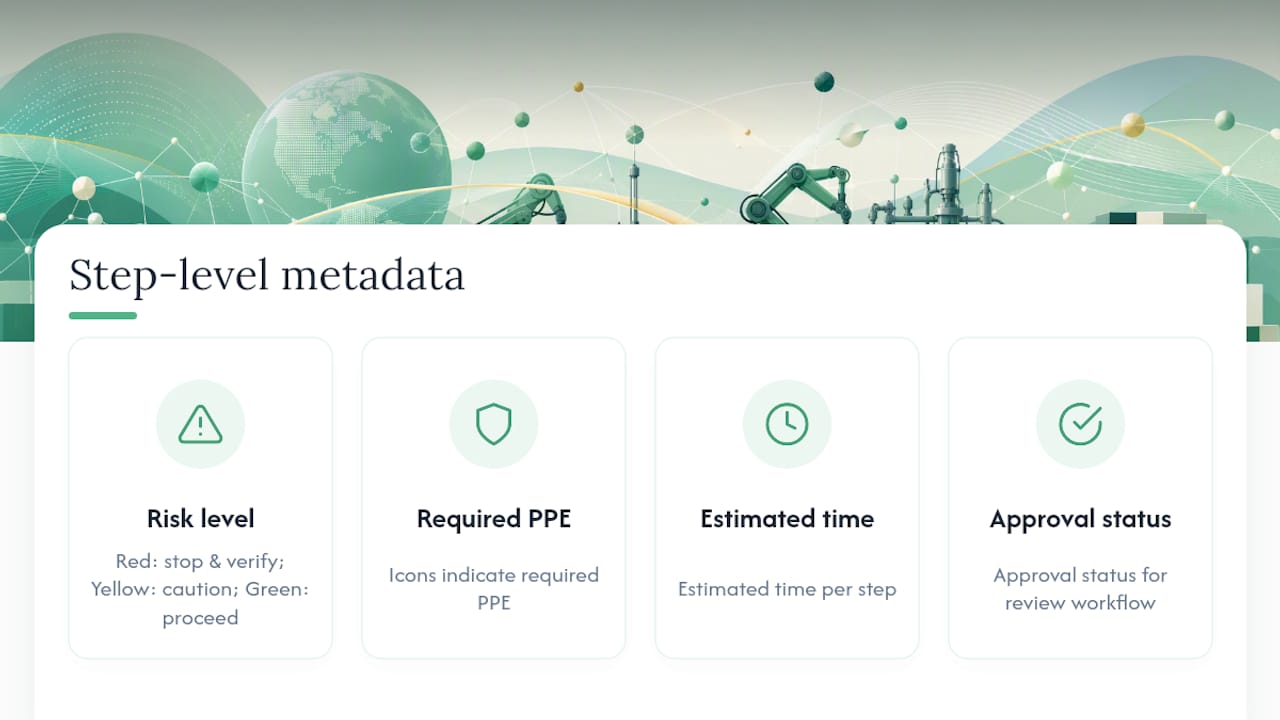
Step-level metadata. Tag each step with: risk level, required PPE, estimated time, and approval status. This metadata drives the human-in-the-loop review workflow and makes audit documentation automatic.
Accessibility for low-literacy operators. Use icons for PPE requirements, color coding for risk levels (red = stop and verify, yellow = caution, green = proceed), and video with captions for complex assembly steps.
Pro Tip: Record your master process as a short walkthrough video first. Modern platforms can extract step-by-step structure, screenshots, and captions from that recording automatically, cutting authoring time from hours to minutes.
How do you implement bilingual instructions from pilot to plant-wide scale?
A structured rollout prevents the two most common pilot failures: choosing the wrong process and measuring nothing.
Pilot selection criteria
Pick a process that is:
- High-frequency (run daily or multiple times per shift)
- Moderate complexity (5–15 steps, not a 60-step changeover)
- Already generating measurable defects or rework you can track before and after
Responsibility matrix
| Role | Responsibility |
|---|---|
| Work-prep author | Records master process, cleans draft, maintains version history |
| SME verifier | Reviews technical accuracy of all steps |
| Language reviewer | Native-speaker review of safety-critical translated steps |
| Floor lead | Validates usability on the line, collects operator feedback |
| IT | Deploys QR codes, manages platform access and integrations |
Pro Tip: Run a before/after measurement rather than an A/B test for your first pilot. A/B tests require splitting a line, which creates operational complexity. A clean 30-day before vs. 30-day after comparison on the same process is simpler and still statistically meaningful.
For the rollout decision gate, ask two questions: Did the pilot process show measurable improvement in at least one KPI? Did operators actually use the instructions (check access rate data)? If both are yes, expand to the next three to five processes and train a second work-prep author using the same recording method.
What features should you require in bilingual instruction software?
When evaluating platforms or writing an RFP, this is the feature list that separates genuinely capable tools from document editors with a translate button.
Must-have features:
- Single-source master with per-language views. Updates to the master propagate instantly to every language. No separate files. Some platforms support 25+ languages from one source with version control and per-step quality-control metadata.
- Visual authoring from video or photos. The platform should extract steps and images from a recording, not require manual text entry. AI-powered tools can convert photos and videos into structured, multilingual step-by-step instructions and deliver them to tablets or AR headsets at the point of work.
| Feature | Why it matters |
|---|---|
| Single-source master | Eliminates version drift across languages |
| Visual authoring from video | Cuts authoring time; improves step accuracy |
| Step-level risk flags | Focuses human review where it counts |
| Version control + audit trail | Required for FDA/SQF/FSMA compliance |
| QR/offline delivery | Ensures access for contractors and temp staff |
| MES/ERP integration | Ties instructions to production context |
For U.S. food manufacturers, also confirm data residency. Your instruction platform stores process IP and operator data. Verify that data is hosted on U.S.-based servers and that the vendor's security posture meets your facility's requirements.
How do you keep bilingual instructions current and safe over time?
Publishing the first version is the easy part. The hard part is keeping every language current when processes change, which in food manufacturing happens constantly: new equipment, seasonal recipes, regulatory updates, corrective actions from audits.
Assign clear ownership before you publish anything. Every process needs a named work-prep author who owns the master record and a named SME verifier who owns technical accuracy. Without named owners, updates get deferred indefinitely.
Change-control workflow for safety-critical steps:
- Process change is identified (by a floor lead, QA, or equipment event).
- Work-prep author updates the master record and flags affected steps.
- SME verifier reviews technical accuracy.
- Language reviewer checks any safety-critical translated steps.
- Supervisor or QA manager approves and publishes.
- Previous version is archived with a timestamp.
Recommended review cadence:
- After any process change: immediate update, full sign-off cycle.
- High-risk tasks (allergen handling, chemical cleaning, lockout/tagout): quarterly review regardless of changes.
- All other processes: annual review minimum.
Pro Tip: Tie your review cadence to your CAPA system. When a corrective action involves a procedure, the work instruction update should be a required step in closing the CAPA, not an afterthought.
For temporary fixes and contractor-supplied processes, apply the same single-source discipline. A "temporary" workaround that lives on a sticky note next to the machine is a liability. Enter it into the system as a temporary revision with an expiration date and an owner.
Integrating with QA audits is straightforward when your platform maintains version-traceable approvals. Auditors can pull the exact version an operator was following on a given date, along with the reviewer sign-offs. That traceability is what converts a bilingual instruction program from a compliance checkbox into a genuine quality asset.
How do you measure whether bilingual instructions are working?
Pick three to five KPIs before the pilot starts. Measuring everything is measuring nothing.
Suggested KPIs:
| KPI | What it measures | Data source |
|---|---|---|
| Error rate | Procedure-related defects | QC inspection log |
| Rework minutes per shift | Time lost correcting errors | Production log |
| First-pass yield | Units correct on first attempt | Line data / MES |
| Safety incidents | Near-misses and recordables | Incident log |
| Time-to-competency | Days until new hire works independently | Training records |
| Instruction access rate | % of shifts where instructions were pulled | Platform analytics |
A simple ROI calculation for stakeholders:
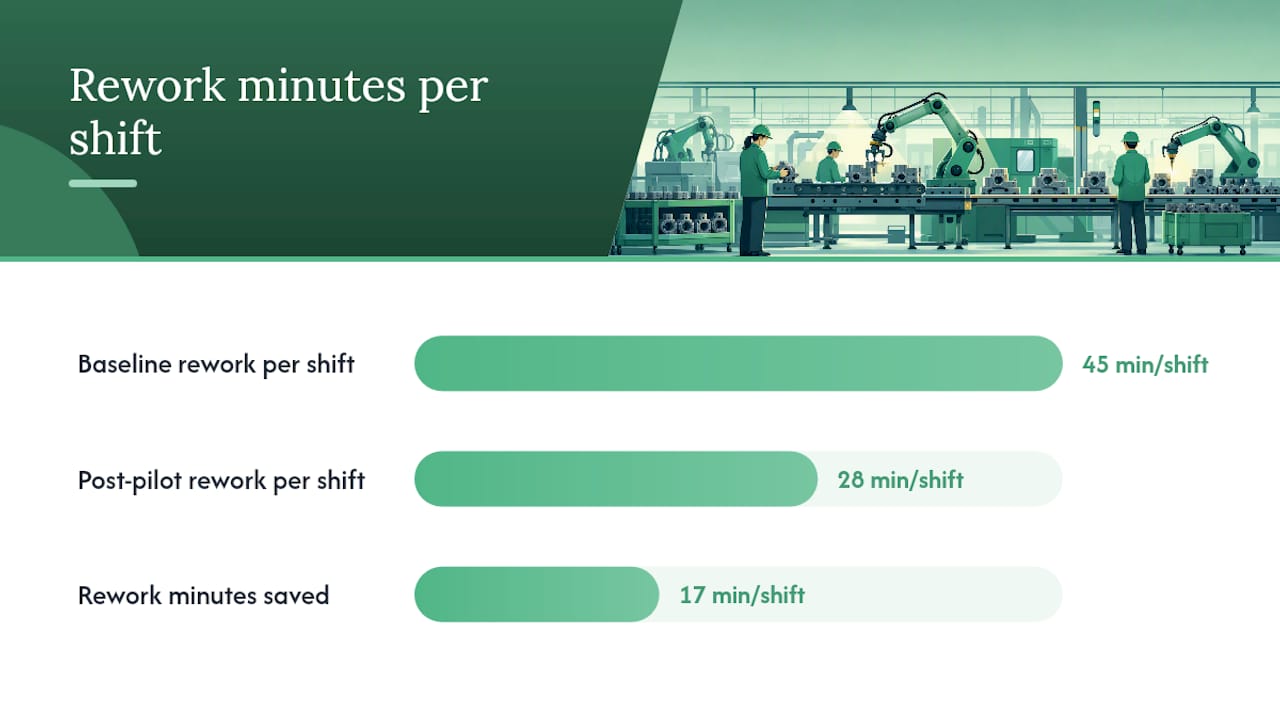
- Measure baseline rework minutes per shift (e.g., 45 minutes per 8-hour shift).
- After the pilot, measure post-implementation rework minutes (e.g., 28 minutes).
- Calculate the reduction: 17 minutes per shift.
- Multiply by labor cost per minute and number of shifts per year to get annual savings.
- Add scrap cost reduction if defect rates dropped.
- Compare total savings to platform cost and implementation time.
For a before/after comparison to be statistically meaningful, run at least 20 production cycles in each period on the same process. That gives you enough data to distinguish real improvement from normal variation.
A successful pilot shows improvement in at least one primary KPI (error rate, rework, or first-pass yield) and an instruction access rate above 70% of shifts. If access rate is low, the delivery method is the problem, not the content. Move the QR code, switch to a tablet mount, or brief the floor lead again.
First-pass yield is often the cleanest single metric for food manufacturers because it captures both defect and rework costs in one number.
What do food manufacturing pilots actually show?
In food manufacturing pilots, the most consistent finding is that procedure-related defects cluster around a small number of steps, typically the ones with the most ambiguous language or the longest text blocks. When those steps get visual replacements and accurate translated captions, error rates on those specific steps drop sharply.
Sensor data adds a layer of validation that paper-based programs cannot provide. When equipment monitoring captures cycle times and downtime events alongside operator notes, you can correlate instruction changes with production outcomes. A process that previously generated frequent short stoppages tied to operator confusion shows a different pattern after clear bilingual instructions are in place. The data makes the connection visible.
Common outcomes in early pilots:
- Faster onboarding for Spanish-speaking operators, measured in days to independent work rather than weeks.
- Fewer supervisor interruptions per shift for procedure clarification.
- Cleaner audit documentation because version-traceable approvals are automatic.
Pro Tip: Pair your instruction platform with your equipment monitoring data. When a sensor flags an anomaly, cross-reference it with the instruction version that was active at that time. This tells you whether the issue was a process deviation or an equipment failure, which changes the corrective action entirely.
For proprietary case studies and customer results from Gembalabs pilots, contact the team directly. Measured outcomes vary by facility size, process complexity, and baseline error rates.
Your 30-day pilot starter checklist
Use this as a one-page handout for the pilot team.
Scoping (before week 1):
- Name the pilot process and confirm it runs daily.
- Assign a work-prep author, SME verifier, language reviewer, and floor lead.
- Confirm language targets (English + Spanish is the standard starting point for most U.S. food facilities).
- Pull 30 days of baseline data: error rate, rework minutes, first-pass yield.
- Confirm the platform and QR delivery method.
Recording and drafting (weeks 1–2):
- Record a complete walkthrough of the process on video.
- Let the platform extract steps and images; clean the draft for accuracy.
- Tag each step with risk level (low/medium/high) and required PPE.
- Flag all safety-critical steps for human review.
Review and approval (week 3):
- SME verifier reviews all steps for technical accuracy.
- Language reviewer checks all medium and high-risk translated steps.
- Floor lead reviews the visual layout for usability.
- Supervisor signs off and approves for publication.
Launch and measure (week 4):
- Post QR codes at the workstation.
- Brief operators on how to access instructions.
- Begin collecting post-pilot metrics on the same KPIs as baseline.
- Schedule a 30-day review meeting.
Pilot template fields:
Pro Tip: Do not brief the entire plant on the pilot. Keep it to the pilot line and the pilot team. A quiet, focused pilot generates cleaner data and fewer disruptions than a facility-wide announcement.
Key Takeaways
The most effective approach to bilingual work instructions is a single-source master that auto-publishes every language, paired with human-in-the-loop review for safety-critical steps and QR-based point-of-work delivery.
| Point | Details |
|---|---|
| Single source prevents drift | Maintain one master process record; every language is a view, not a separate file. |
| Visual-first beats text-heavy | Annotated photos and short clips per step improve comprehension regardless of reading fluency. |
| Human review where it counts | Route only medium and high-risk steps to a bilingual SME reviewer to balance speed and safety. |
| Measure before you pilot | Pull 30 days of baseline error rate, rework minutes, and first-pass yield before week one. |
| Gembalabs connects instructions to data | Sensor monitoring and operator notes let you correlate instruction changes with production outcomes in real time. |
The part most guides skip
Most articles on multilingual work instructions treat translation as the hard part. It is not. The hard part is governance: who owns the master, who reviews the safety-critical steps, and what happens when a process changes at 11 PM on a Friday and the floor lead improvises a fix that never makes it back into the system.
The single-source model solves the technical version-drift problem elegantly. What it does not solve is the human tendency to treat a "temporary" workaround as permanent, or to skip the language reviewer step when a deadline is tight. Those are organizational failures, and no software prevents them without clear ownership and a change-control habit that is genuinely enforced.
The other thing worth saying plainly: the record-once, auto-generate approach has made the authoring barrier almost disappear. A floor supervisor with a phone can record a process walkthrough, and a platform can produce a structured, translated, visual SOP in under 10 minutes. The bottleneck is no longer writing the instruction. It is deciding which processes to prioritize, assigning reviewers, and building the habit of updating the master when anything changes.
Start with your highest-defect process. Record it this week. The governance conversation is easier once the team has seen a working example.
Gembalabs fits where most SME food manufacturers actually are
Small and mid-size food manufacturers rarely need an enterprise instruction platform with a six-month implementation. What they need is a system that connects operator behavior to production outcomes without requiring a dedicated IT team to run it.
Gembalabs is built for exactly that situation. The platform combines sensor-based equipment monitoring with operator notes and AI-generated production intelligence reports, giving you a real-time picture of what is happening on the line and why. Bilingual support in English and Spanish is built in, so operators can log notes and access production context in the language they work in. When you tie that to a structured instruction program, you get something most facilities do not have: a direct, data-backed connection between the instruction an operator followed and the production outcome that resulted.
The pilot model is straightforward. Start with one process, one line, and 30 days of data. See what the numbers show before committing to a broader rollout. To see how the intelligence layer works and what a production report looks like for your type of facility, visit the Gembalabs intelligence page and request a demo.
Useful sources
The sources below back the key claims in this article and are worth bookmarking for deeper reading.
- Multilingual Work Instructions: One Source, Every Language
- Work Instructions for Foreign-Language Workers With AI | SOPX
- How AI can turn photos and videos into multilingual work instructions | ActARion
- Platform — AI Digital Work Instructions | Instant Instructions
- bls.gov
- kff.org
- Guiding Principles for Dual Language Education
- Human-in-the-loop
Next steps:
- Review the standard work practices guide for master process documentation principles.
- Check first-pass yield benchmarks for your process type to set a realistic pilot target.