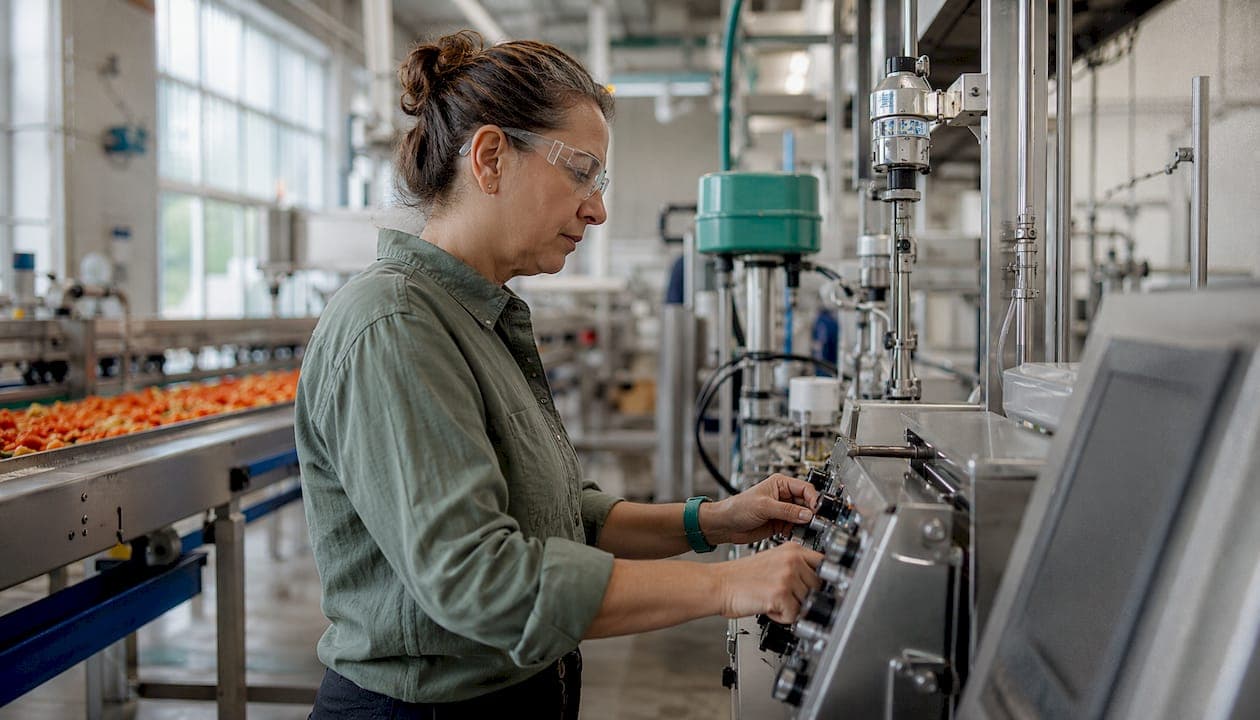
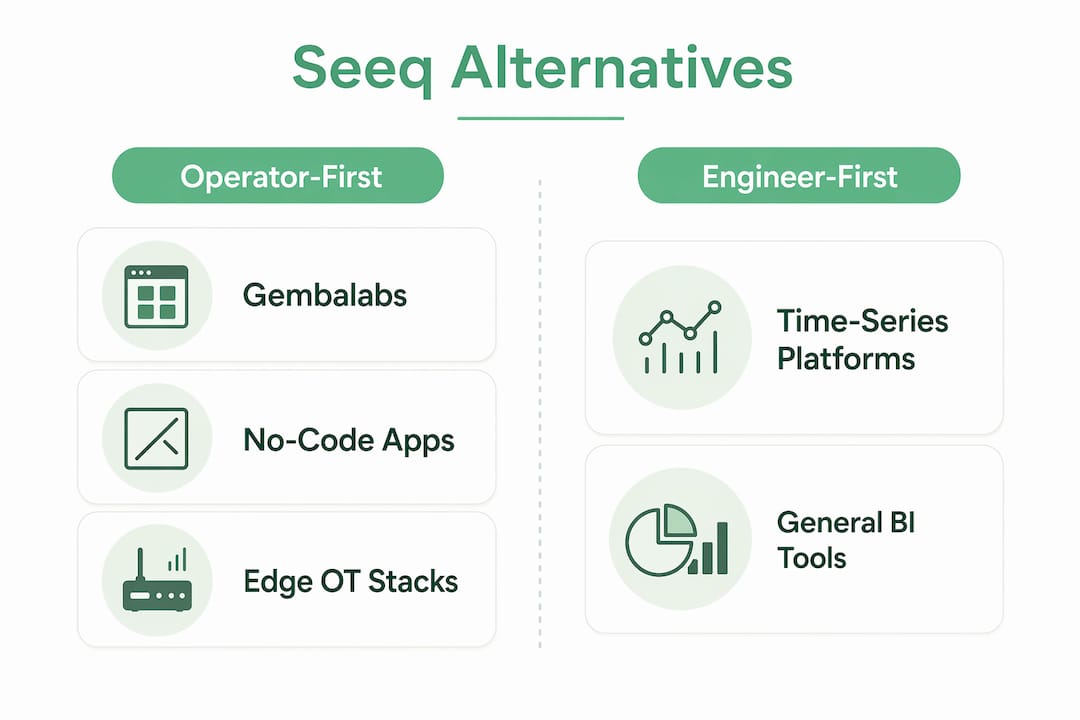
For small and medium food plants, the right move is to pilot a compact, operator-first monitoring platform before committing to any large-scale engineering analytics suite. The shortlist below reflects that priority.
Start here:
- Gembalabs — sensor-based real-time monitoring with operator input collection, AI-generated shift reports, and bilingual (English/Spanish) support; built specifically for small and medium food manufacturers
- Time-series-first analytics platforms — powerful pattern recognition and historian connectivity, but typically sized for enterprise process engineering teams
- No-code operator apps with embedded monitoring — fast to deploy, strong on shift logs and mobile data entry, lighter on deep equipment analytics
- Edge-first OT monitoring stacks — strong for facilities with limited cloud connectivity, but often require dedicated IT to configure and maintain
- General BI tools adapted for industrial use — flexible reporting, but heavy customization required to handle real-time industrial time-series data
The common constraint across food plants at this scale: limited IT staff, a bilingual workforce, and a need to see both equipment cycles and human-reported events on the same screen. That combination rules out most enterprise-grade Seeq competitors before the first demo.
Table of Contents
- How do these Seeq alternatives compare at a glance?
- How do you choose the right Seeq alternative for your plant?
- What integration and implementation actually cost you
- Why operator-centric features deliver faster results
- What pricing and procurement actually look like
- Short profiles: which solution category fits your plant?
- Key Takeaways
- The tool that fits your plant isn't always the most powerful one
- Gembalabs is built for exactly this pilot
- Useful sources and further reading
How do these Seeq alternatives compare at a glance?
Vendors rarely publish standardized pricing; expect to request a demo or RFP for commercial terms.
| Dimension | Gembalabs | Time-series-first platforms | No-code operator apps | Edge-first OT stacks | General BI tools |
|---|---|---|---|---|---|
| Best for | Small/medium food plants | Large process engineering teams | Shift-log-heavy operations | Air-gapped or low-bandwidth sites | Data teams with dev resources |
| Deployment | Cloud/edge hybrid | Cloud or on-prem | Cloud | Edge-first | Cloud |
| Native connectors | Sensors, PLCs, historians | Historians, OPC-UA | Limited OT connectors | OPC-UA, Modbus, MQTT | Minimal; requires ETL |
| Operator usability | High — built for shop floor | Low — built for engineers | High | Medium | Low |
| Human-data integration | Native (downtime, rework, notes) | Limited | Moderate | Minimal | Manual import only |
| AI/reporting | Out-of-the-box AI shift reports | Custom-built | Basic dashboards | Alerts only | Custom-built |
| Implementation timeline | 2–6 weeks for pilot | 3–6 months | 2–4 weeks | 4 weeks | 3 months |
| Bilingual support | English/Spanish native | Rarely | Varies | Rarely | Varies |
| Pricing model | Subscription, pilot-based | Per-asset/user; RFP required | Per-user subscription | Per-asset; RFP required | Per-user/seat |
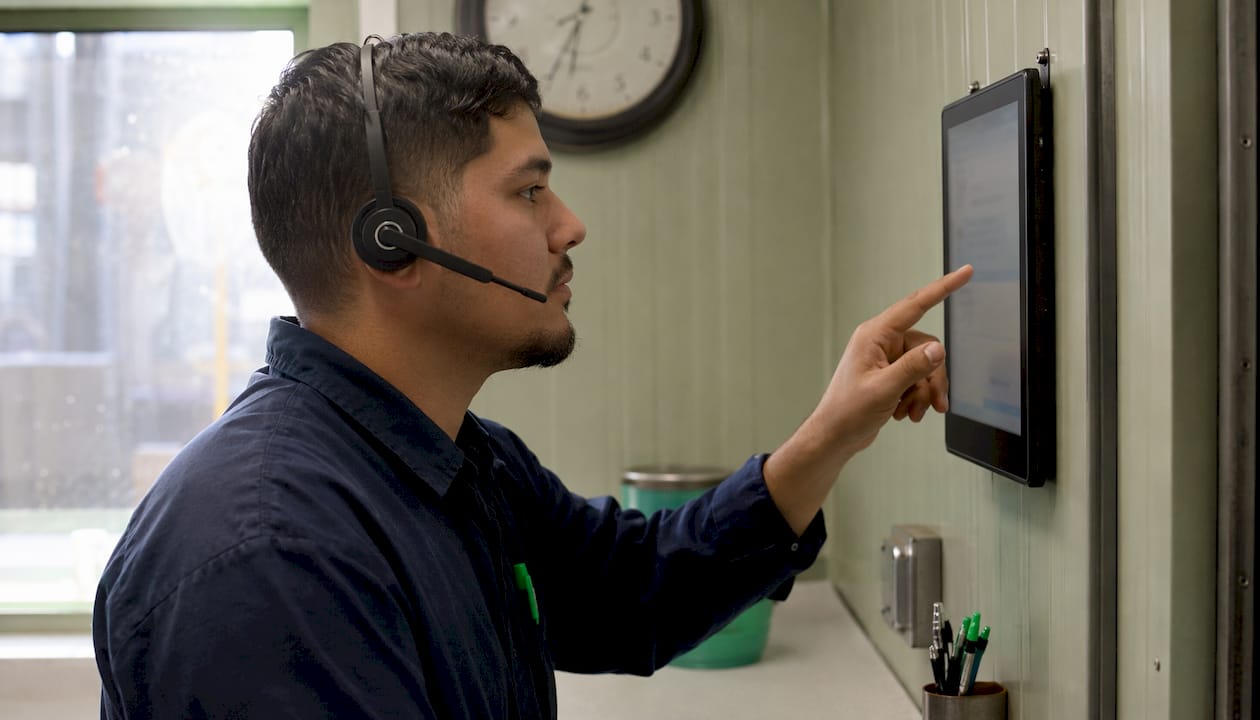
"Operator-first" means the interface is designed for a shift supervisor, not a data scientist. That distinction cuts implementation risk in half for a 50-person food plant — and it's the main reason enterprise analytics tools stall after the pilot.
How do you choose the right Seeq alternative for your plant?
Structural fit, cost, support, and compliance drive platform switches more than feature lists. Use this checklist before shortlisting any vendor.
Selection criteria (prioritized for food plants):
- Operator usability — can a shift supervisor use it without IT help?
- Native historian and PLC connectors — does it speak OPC-UA, Modbus, and MQTT out of the box?
- Human-data input — can operators log downtime reasons and rework notes directly in the platform?
- Bilingual support — English and Spanish, both in the UI and in vendor support
- Security and compliance — SOC 2, data residency, and food-industry audit trail requirements
- Pilot availability — will the vendor run a fixed-scope proof of value before a full contract?
- Support SLAs — guaranteed response times, not just a ticketing queue
Questions to paste into your RFP or demo call:
- Which industrial protocols do you support natively (OPC-UA, Modbus, MQTT, MQTT Sparkplug)?
- What is the data latency from sensor to dashboard?
- What are your support hours, and do you offer Spanish-language support?
- Can we run a 30–60 day pilot on a single asset with defined acceptance criteria?
- Who owns the data if we cancel the contract?
- What does the onboarding and operator training plan look like, and how many days does it require?
- Can you provide a reference contact from a food manufacturing facility?
Red flags to walk away from:
- No published pilot program or proof-of-value option
- Mandatory multi-month professional-services engagement before go-live
- No way to capture manual operator events alongside machine data
- Zero food manufacturing references
- Pricing that only appears after a 45-minute sales call with no ballpark range
What integration and implementation actually cost you
Validating integration capability during evaluation is non-negotiable — not something to confirm after signing.
Technical checklist before committing to any vendor:
- Confirm supported protocols: OPC-UA, Modbus, MQTT, and your specific historian (OSIsoft PI, Ignition, FactoryTalk)
- Verify PLC access patterns — read-only polling vs. event-driven push
- Check MES/ERP hooks if you need production order context
- Identify edge gateway requirements for facilities with limited cloud bandwidth
Typical pilot timeline for a small/medium food plant:
| Phase | Activity | Typical Duration |
|---|---|---|
| Discovery | Map assets, confirm protocols, define KPIs | 1–2 weeks |
| Connector setup | Install edge gateway, validate data flow | 1–2 weeks |
| Pilot (single asset) | Live monitoring on bottleneck filler or oven | 2–4 weeks |
| Validation | Review reports, confirm acceptance criteria | 1 week |
| Phased rollout | Expand to additional lines | 4 weeks |
Budget for 2–5 days of operator training and expect some data-cleaning effort if your historian has inconsistent tag naming. IT owns the connector setup; operations owns the acceptance criteria. Keep those responsibilities separate from the start.
Pro Tip: Stage your pilot on a single high-impact asset — your bottleneck filler or primary oven — with written acceptance criteria (data latency under 60 seconds, downtime capture rate above 90%, bilingual UI confirmed). A vendor who won't agree to those terms before contract signature is telling you something important.
Why operator-centric features deliver faster results
Platforms that translate time-series patterns into operator-actionable language reduce mean time to insight because they answer why an event happened, not just that it happened. A shift supervisor who can read a plain-language rework summary in Spanish acts on it in minutes. A data scientist who needs to build that query from scratch acts on it in days.
Operator-facing features worth prioritizing:
- Simple shift log and incident forms (under 3 taps on a tablet)
- Mobile data entry in both English and Spanish
- Single-screen dashboards sized for a shift supervisor, not a control room
- Out-of-the-box downtime and rework reports that require no configuration
- Automated alerts tied to thresholds operators actually set
AI-generated shift summaries are where this pays off most visibly. Instead of a supervisor spending 20 minutes pulling data at end-of-shift, the platform delivers a plain-language summary of what stopped, why, how long, and what recurred. That's the kind of output to request as a sample during any demo — and it's a reasonable pilot acceptance criterion.
What pricing and procurement actually look like
Expect opaque list pricing across this category. Price depends on asset count, user seats, required connectors, and the professional services scope — and vendors commonly require an RFP or demo before quoting.
Per-asset pricing favors plants with fewer monitored lines; per-user pricing favors plants with large operator headcounts. Cloud deployments typically cost less upfront; edge deployments carry higher setup costs. Integration services are almost always billed hourly unless you negotiate a fixed-price scope.
Procurement moves that protect your budget:
- Request pilot-based pricing with a defined scope and fixed cost
- Cap integration hours in the contract — open-ended hourly work is where budgets blow out
- Include SLA language covering uptime, data latency, and support response time (specify Spanish-language support explicitly)
- Tie phased payments to rollout milestones, not calendar dates
- Require measurable acceptance criteria before the pilot converts to a full subscription
Short profiles: which solution category fits your plant?
Gembalabs
Best for: Small and medium food manufacturers who need real-time equipment monitoring and operator input in one place, with no dedicated data team.
- Combines sensor data with operator-reported events (downtime, rework, shift notes) natively
- AI-generated production intelligence reports delivered out of the box — no custom configuration
- Bilingual English/Spanish support in both the UI and vendor team
Cons: Designed for food manufacturing specifically, so it won't fit a general process-manufacturing use case. Pilot scope is typically one facility at a time.
Suitability: Best for small food plants with minimal IT and a bilingual workforce.
Time-series-first analytics platforms
Best for: Larger plants with dedicated process engineers who need deep pattern recognition across complex historian data.
- Strong historian connectivity and pattern search
- Powerful for root cause analysis on complex, multi-variable processes
- Broad ecosystem of industrial connectors
Cons: Built for engineers, not shift supervisors. Operator adoption in smaller plants is consistently slow, and implementation timelines run 3–6 months minimum.
Suitability: Better fit for enterprise process manufacturing than a 50-person food plant.
No-code operator apps with embedded monitoring
Best for: Plants that prioritize digital shift logs and mobile data capture over deep equipment analytics.
- Fast to deploy, often live within two weeks
- Intuitive mobile interface for frontline operators
- Good for digitizing paper-based processes
Cons: Limited native OT connectors; real-time equipment data usually requires a separate integration layer. Reporting depth is shallow compared to dedicated monitoring platforms.
Suitability: Good starting point if your biggest gap is paper-based shift logs, not equipment visibility.
Edge-first OT monitoring stacks
Best for: Facilities with unreliable internet connectivity or strict data-residency requirements.
- Strong OPC-UA, Modbus, and MQTT support at the edge
- Data stays on-premises if required
- Good for air-gapped production environments
Cons: Configuration requires IT or OT engineering expertise. Operator-facing dashboards are often an afterthought, and bilingual support is rare.
Suitability: Right for facilities where connectivity or compliance rules out cloud-first tools.
General BI tools adapted for industrial use
Best for: Organizations with a data team that can build and maintain custom pipelines.
- Flexible visualization and reporting
- Broad connector ecosystem via third-party ETL tools
- Familiar to business analysts
Cons: Heavy engineering work required to align real-time industrial time-series data. No native operator input capture. Not a realistic option for a plant without dedicated data staff.
Suitability: Only viable if you already have data infrastructure and engineering resources in-house.
Key Takeaways
For small and medium food manufacturers, the fastest path to real-time visibility is a pilot of an operator-first platform with defined acceptance criteria, not a feature-by-feature comparison of enterprise analytics tools.
| Point | Details |
|---|---|
| Pilot before you commit | Run a single-asset pilot with written acceptance criteria before signing any full contract. |
| Operator usability decides adoption | A platform built for engineers will stall in a 50-person food plant; prioritize shop-floor simplicity. |
| Human data inputs are non-negotiable | Verify that the platform captures operator downtime logs and rework notes alongside machine data during the pilot. |
| Bilingual support belongs in the RFP | Specify English/Spanish support in both the UI and vendor SLA — confirm it before go-live, not after. |
| Gembalabs fits this use case | Gembalabs combines sensor monitoring, operator input, and AI shift reports in one platform built for small food manufacturers. |
The tool that fits your plant isn't always the most powerful one
Most facility managers I talk to have been burned by the same mistake: they evaluated the most feature-rich platform on the market, got impressed by the demo, and then spent six months waiting for IT to finish the integration while the shop floor kept running on clipboards.
The strategic rule I'd apply to every vendor evaluation at this scale: if a vendor can't demonstrate measurable value on a single asset in 60 days, it's the wrong fit for a small food plant. Full stop. The right platform proves itself fast, in your language, on your equipment, with your operators using it without a training manual.
Gembalabs is built for exactly this pilot
If the profiles above describe your situation — a small or medium food plant, a bilingual workforce, limited IT, and a need to see equipment data and operator notes on the same screen — Gembalabs is worth a direct look.
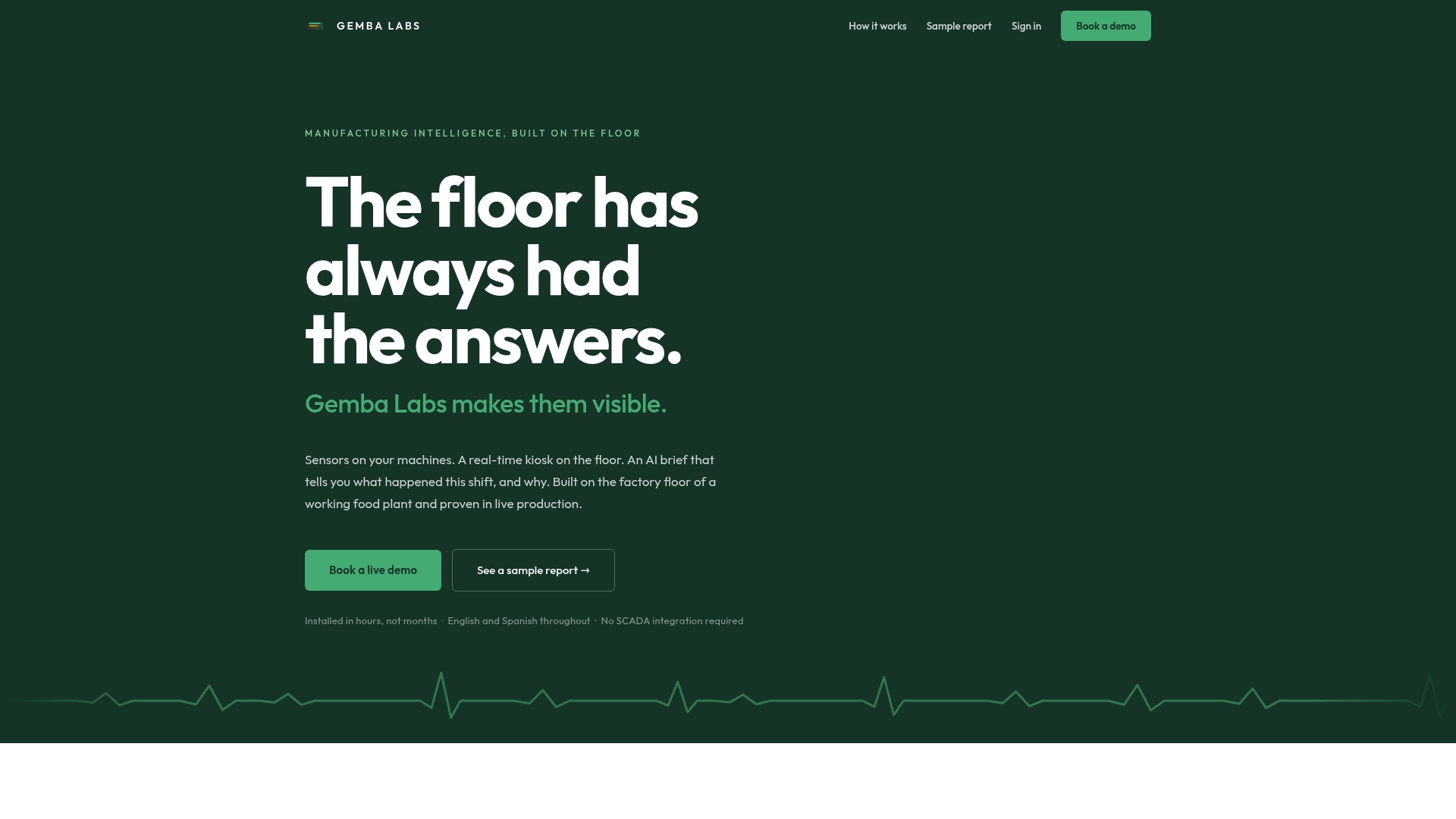
Gembalabs connects to your equipment via sensors, collects operator inputs like downtime reasons and rework notes, and delivers AI-generated production intelligence reports in plain language, in English and Spanish. There's no data team required and no months-long implementation before you see results.
For your pilot, ask for: one bottleneck asset monitored live, data latency under 60 seconds, downtime capture confirmed, a bilingual UI walkthrough, and a sample shift summary report delivered before the pilot ends. Those five criteria will tell you everything you need to know. Request a pilot at gembalabs.io.
Useful sources and further reading
- How It Works | Gemba Labs — product overview covering sensor integration, operator input collection, and AI report generation
- Gemba Labs sample report — example of the operator-facing shift and rework summaries to request during any pilot
- Real-time equipment monitoring for food manufacturers — practical integration guidance specific to food plants
- Root cause analysis in manufacturing — practical RCA framework to pair with pilot acceptance criteria
- OEE vs TEEP: A 2026 guide — KPI definitions useful for setting measurable pilot success criteria
- Seeq alternatives and competitors (RFP Wiki) — category-level market overview and procurement guidance
- Who are Seeq? (Viewpoint Analysis) — independent analysis of Seeq's positioning and where alternatives fit
- Daily production report guide for food manufacturers — examples of operator-facing metrics to include in RFP reporting requirements