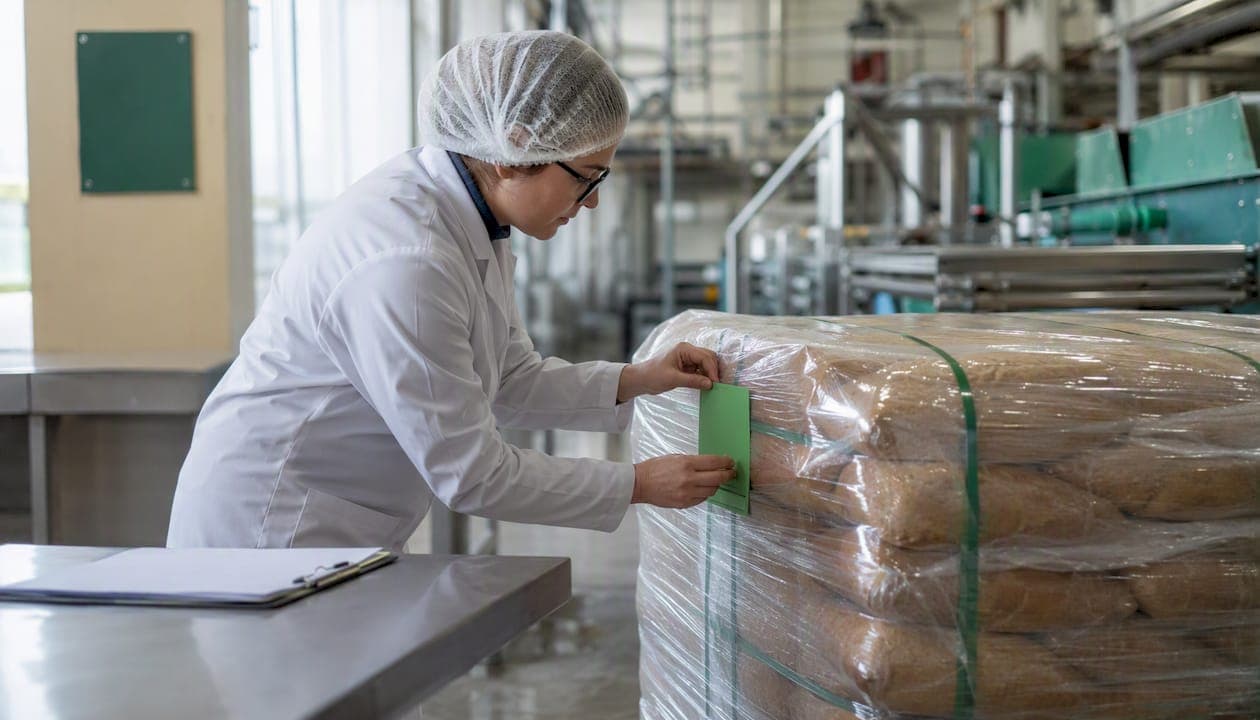
Quality holds tracking is the systematic, auditable process of quarantining suspect material, blocking it from shipment or production use, and recording every decision until disposition is complete. The moment you detect a problem — a failed lab result, a damaged pallet, a supplier deviation — the first move is to create a system-enforced hold row tied to that batch or lot, assign an owner, and set a resolution deadline. Everything else in this guide builds from that one action.
Pro Tip: Configure your inventory system to exclude held stock at the allocation and query level, not just with a physical tag. A physical label can be missed at 2 AM during a bulk pick. A system filter cannot.
Key Takeaways
A quality hold is only as good as the system enforcing it — create a hold row, assign an owner, and block allocation before any other step.
| Point | Details |
|---|---|
| Enforce holds at the system level | Configure allocation filters so held stock cannot be picked, even during bulk orders or off-hours. |
| Capture evidence at detection | Attach photos, lab results, and operator notes to the hold row immediately, not after inspection. |
| Assign release authority to quality | Only QC-designated approvers should move a hold to released; log name, evidence, and reason every time. |
| Track five core KPIs | Monitor active holds, aging buckets, mean time to disposition, rework vs. scrap rate, and recurrence rate by cause. |
| Gemba Labs for SMB food plants | Sensor data, operator notes, and AI reports give QC teams the context needed for hold reviews and RCA in one place. |
Table of Contents
- What does quality holds tracking actually cover?
- How to run a tracked hold from detection to disposition
- Which software features should you require for hold tracking?
- KPIs and dashboard metrics for your hold program
- Approval, escalation, and audit readiness in U.S. food plants
- How hold rows, batches, and traceability fit into your MES/WMS/ERP
- How to close the loop with RCA and trend analysis
- A note from the team at Gemba Labs
- Gemba Labs connects sensor data to your hold workflow
- Sources
What does quality holds tracking actually cover?
A hold-tracking process is only as strong as the capabilities underneath it. Before you evaluate software or redesign a workflow, confirm these building blocks are present.
Status model and hold reason classification
Every held unit needs a status that tells the system what it is: inspection pending, quarantined, damaged, expired, returned, or under recall. Hold reasons should be configurable — "foreign material," "label error," and "supplier deviation" are not the same problem and should not feed the same corrective action queue.
Evidence capture
A hold record without evidence is just a flag. Attach lab results, photos, timestamps, actor identity, and batch or lot context to the hold row at the moment of creation. Inventory status and quality holds documentation from AWRA OpsHub describes this model well: held stock remains visible but excluded from available quantities, with reason, actor, timestamp, location, and outcome all tied to the same row.
Enforcement
The hold must block allocation. If your WMS or ERP can still pick held stock during a bulk order, the hold is advisory, not enforced. That distinction matters in a food plant where a single mislabeled pallet can reach a retail shelf.
Governance
Role-based release and approval workflows determine who can move stock from "quarantined" to "available." Tamper-evident audit trails log every status change with the user's identity and timestamp. These are not optional for CFR Part 11 compliance in electronic record environments.
Traceability hooks
Hold rows should link to your MES, WMS, and ERP so that a single batch number traces forward to finished goods and backward to raw material receipts. That connection is what makes a focused recall possible — pulling one batch instead of an entire warehouse.
How to run a tracked hold from detection to disposition
The workflow has five gates. Each one has a clear owner and a time target.
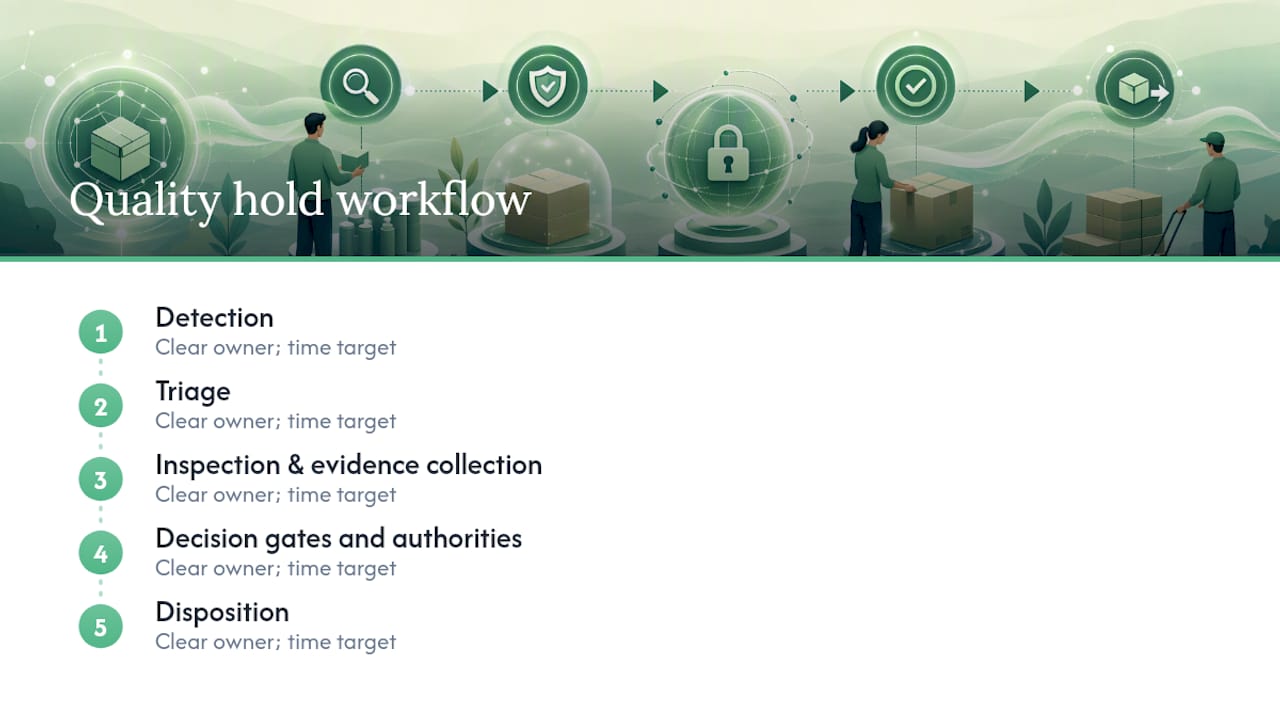
Detection
Holds originate from inbound sampling, in-line checks, or customer returns. At the moment of detection, capture: batch or lot number, location, quantity, the inspector's identity, the detection method, and the suspected defect. Do not wait to create the hold record until after the inspection is complete. Create it now, with status "inspection pending," and move the stock to a designated quarantine zone.
Triage
Assign a hold reason from your configured list promptly after detection, confirm the stock is isolated, and identify the hold owner. The owner is the person accountable for driving the hold to disposition — typically a QC lead or supervisor, not a line operator.
Inspection and evidence collection
Run the required tests and attach results directly to the hold row. Photos of the defect, lab certificates, and supplier documentation all belong here. A hold record that references a separate paper file is a gap waiting to become an audit finding. Batch traceability paired with system holds enables precise recalls and makes trace drills measurable — aim to trace a batch to customers in minutes, not days.

Decision gates and authorities
Release authority belongs to quality, not production. Before any disposition decision, a named QC approver must review the evidence and log their decision. For potential recalls or regulatory notifications, escalate to the plant manager or legal counsel. Configure time-based escalation: if a hold has not moved in 24 hours, notify the QC supervisor automatically. If it has not moved in 72 hours, notify the plant manager.
Disposition
Four outcomes are possible: release to available, rework, return to vendor, or scrap. Each requires a system event that adjusts inventory and records the accounting impact. Cost of quality concepts from ASQ frame scrap and rework as failure costs — tracking them at disposition gives you the data to justify prevention investments later.
Shift checklist for a compliant hold record:
- Hold row created with batch/lot, location, and quantity
- Stock physically isolated and system status set
- Hold reason assigned from configured list
- Owner named and notified
- Evidence attached (photos, lab results, timestamps)
- Disposition recorded with approver identity and date
Which software features should you require for hold tracking?
Translate the workflow above into a procurement checklist. Not every feature is equal.
Must-have features
- Hold status rows tied to batch, lot, or serial number
- Enforced allocation filters that prevent picking held stock
- Audit trail with attachments, timestamps, and actor identity
- Role-based approvals with configurable release authorities
- Configurable hold reasons and status codes
Nice-to-have features
- Automatic escalation timers and alerts when holds age past thresholds
- Rules engine for auto-holds triggered by failed lab values
- Mobile capture with photo and voice note support
- Bilingual operator interface (English and Spanish) for mixed-language floor teams
Integration expectations
Your hold system should sync with ERP, MES, and WMS so that a hold created at receiving immediately removes that quantity from available stock across all systems. Lab data import eliminates manual re-entry and the transcription errors that come with it. The goal is a single source of truth for stock quantities — one number, one status, visible everywhere.
Pro Tip: During any software demo, ask the vendor to show you a bulk pick order that includes held stock. If the system allows the pick to proceed, the hold is not enforced. Test this at off-hours settings too, since some systems relax controls outside business hours.
KPIs and dashboard metrics for your hold program
Five metrics cover most of what a QC leader needs to monitor.
| KPI | Definition | Example target |
|---|---|---|
| Active holds | Count of open hold rows at any moment | Review daily; flag if trending up week-over-week |
| Hold aging | Days since hold creation, bucketed (0–2, 3–7, 8–30, 30+) | Limit the proportion of holds aging between a week and a month to a low level. |
| Mean time to disposition | Average days from hold creation to closed disposition | Aim for a short average disposition time for standard holds. |
| Rework vs. scrap rate | Percent of dispositioned holds resolved by rework vs. scrap | Track trend; rising scrap signals upstream quality gaps |
| Recurrence rate by cause | Percent of holds sharing the same root cause within 90 days | Repeated causes appearing frequently should trigger a formal corrective action process. |
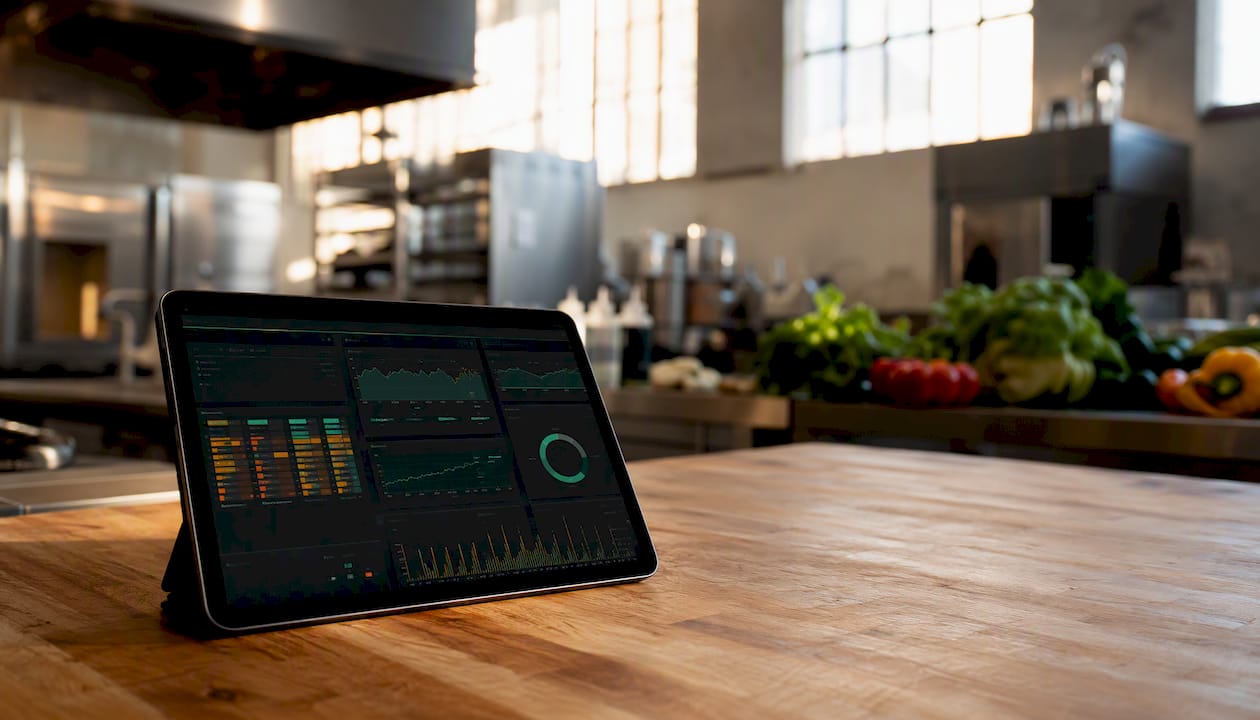
Dashboard design matters as much as the metrics themselves. Build three views: an open-holds board sorted by aging, a disposition summary by hold reason, and a recurring-hold heatmap by supplier or line. The heatmap is where recurring issue analysis pays off — patterns that are invisible in daily hold counts become obvious when you plot them by cause over 90 days. First pass yield data from your production lines can also contextualize hold rates; a spike in holds from one line often correlates with a yield drop on the same shift.
Approval, escalation, and audit readiness in U.S. food plants
Getting the governance layer right is where most small plants fall short. Here is what a defensible setup looks like.
Release authority
Only quality personnel should be able to move a hold to "released." Production supervisors can request a review, but they cannot approve their own release. Every release must log the approver's name, the evidence reviewed, and the reason for the decision.
Escalation patterns
- Time-based: auto-notify the QC supervisor when a hold exceeds 24 hours without a disposition decision
- Severity-based: route holds flagged as potential recalls directly to the plant manager and legal counsel
- Regulatory: for FDA-regulated products, potential recall holds require documented investigation before any disposition
Audit readiness
FDA CAPA guidance requires that investigations be documented, corrective actions assigned, and effectiveness verified. Your hold records feed directly into that requirement — a disposition without a linked CAPA for a recurring defect is a gap an inspector will find. CFR Part 11 sets the bar for electronic records: validated systems, audit trails, and controls on who can alter records.
Pro Tip: Run a mock audit annually. Pull five hold records at random and verify that each one has a named approver, attached evidence, a disposition event, and a linked CAPA where required. Gaps found internally are far cheaper than gaps found by an FDA investigator.
How hold rows, batches, and traceability fit into your MES/WMS/ERP
The data model decision that matters most: hold per stock row versus hold per batch. A per-stock-row model gives you precise control — you can hold 200 units of a lot while releasing the remaining 800 that passed inspection. A per-batch hold is simpler to implement but forces an all-or-nothing decision, which inflates scrap rates unnecessarily.
Integration checklist
- Inbound receiving triggers a hold row when inspection is required
- Lab results import automatically updates hold status (pass triggers release review; fail confirms hold)
- Dispatch checks query hold status before confirming a shipment
- Disposal or rework events write an adjustment journal to inventory and close the hold row
A single source of truth for stock quantities means held rows persist with their original quantity until a disposition event explicitly adjusts them. Never let a held row disappear through a manual inventory correction — that breaks the audit trail and makes a focused recall impossible. For food manufacturers, traceability in food manufacturing requires that every lot movement be logged, and hold rows are part of that chain.
How to close the loop with RCA and trend analysis
A hold that closes without a root cause statement is a hold that will recur. ASQ defines RCA as a team-based method to uncover structural causes, and recommends tying RCA findings into continuous improvement routines rather than treating them as one-off investigations.
A practical RCA routine for held-stock events
- Establish recurrence: check whether the same hold reason has appeared more than twice in 90 days for the same supplier, line, or ingredient
- Assemble a cross-functional team: QC lead, line supervisor, and the person with authority to approve a fix
- Apply Five Whys or a fishbone diagram to drill past symptoms to a structural cause
- Write a root-cause statement: one sentence that names the cause and the mechanism
- Generate a CAPA with a named owner, a completion date, and a verification method
Linking holds to CAPA
Repeated rejects from the same supplier become a supplier corrective action request. Repeated line holds tied to the same equipment state become a preventive maintenance trigger. The data already exists in your hold records — the RCA routine is what converts it into a structural fix.
Pro Tip: Require that the person closing a CAPA attach the disposition evidence and a verification log to the original held-row audit trail. This creates a closed loop: the hold that triggered the investigation and the evidence that the fix worked live in the same record.
A note from the team at Gemba Labs
Hold tracking looks straightforward on paper. In practice, the gap between a compliant hold record and a useful one is operator data. When a sensor flags an anomaly on a filling line at 11 PM, the hold record needs more than a batch number — it needs the equipment state at the time of detection, the operator's note about what they observed, and a timestamp that ties both to the hold row. That combination is what makes an RCA session productive instead of speculative.
On-shift checklist for a compliant hold record:
- Create the hold row before moving the stock
- Scan or enter the batch/lot number and quantity
- Set the hold reason from the configured list
- Attach at least one piece of evidence (photo, test result, or sensor reading)
- Name the hold owner and set a resolution deadline
- Confirm the stock is excluded from available inventory in the system
When evaluating any solution, test two things in the demo: whether held stock is blocked from a live pick order, and whether the audit trail shows the exact user and timestamp for every status change. If either test fails, the system is not ready for a regulated food environment.
Gemba Labs connects sensor data to your hold workflow
Food plants running Gemba Labs get real-time equipment monitoring and operator input in the same place. When a hold event occurs, the AI-generated intelligence report can pull the equipment state, shift performance, and operator notes from that window — giving your QC team the context they need for RCA without hunting through separate systems.
A pilot starts with a single facility. You connect your equipment sensors, configure operator input fields in English or Spanish, and set the KPI targets you want to track. Within the first 30 days, you have a baseline: hold counts by reason, aging data, and the first recurring-issue patterns your team can act on. The Gemba Labs intelligence page shows exactly how sensor and operator data combine into reports you can use in a hold review or an RCA session. Request a demo to see how it maps to your plant's workflow.